Choosing the right 16 inch balance bike helps children build balance, coordination, and confidence before transitioning to a pedal bike. The five models below are popular choices that balance weight, adjustability, and durability for kids roughly ages 4 to 9. Each offers a no-pedal learning experience and straightforward assembly, with kid-friendly features designed for safe outdoor play. This guide compares size, brakes, tires, and growth accommodation to help parents pick the best fit for their child.
| Product | Brand | Age Range | Key Feature |
|---|---|---|---|
| Bicystar 16 Inch Balance Bike – Blue | bicystar | 5-9 years | Adjustable height; lightweight; air tires; no pedals |
| Bicystar 16 Inch Kids Balance Bike (Blue) – 2nd Model | bicystar | 5-9 years | Grow-with-me adjustability; quick-release |
| GASLIKE 16 Inch Balance Bike (Silver) | GASLIKE | 4-8 years | Carbon steel frame; pneumatic 16″ tires; no-pedal design |
| Bixe Balance Bike – 16″ (Green) | Bixe | 4-9 years | No-pedal learning; durable; safety hardware |
| JOYSTAR 16 Inch Balance Bike Blue | JOYSTAR | 4-8 years | Front handbrake; adjustable seat/handlebar; lightweight |
Bicystar 16 Inch Balance Bike – Blue

The Bicystar 16 Inch Balance Bike for Ages 5-9 emphasizes growth with adjustable seating and handlebar heights that accommodate a range from 17–24 inches on the seat and 25–28 inches on the handlebars. This no-pedal design helps children accelerate their balance, steering, and confidence as they push off and glide. The bike’s lightweight frame—about 10.8 pounds—facilitates control and maneuverability, which is especially important for kids still mastering balance. Its low stand-over height also helps reduce stumbles, enabling smoother starts and stops on sidewalks or gentle trails.
Two standout elements in this model are the quick-release height adjustments and the emphasis on balance as a learning pathway. The design supports continued use as a child grows, making it a practical long-term option for households wanting a single bike that can span several years. The model’s light build pairs well with young riders who are transitioning from shorter balance bikes to larger wheels, encouraging enthusiastic practice without overwhelming heft or complexity.
Bicystar 16 Inch Balance Bike – Grow-With-Me

This second Bicystar listing centers on a true grow-with-me approach, designed for kids aged 5–9 with an adjustable seat from 15–22.6 inches and handlebar height from 26.4–29.1 inches. The emphasis is on enabling a smooth transition from a balance bike to a pedal bike by providing a wide height range that can be tuned as your child grows taller and gains more balance control. Assembly is kept straightforward so families can get their child riding quickly, with minimal tools and steps required to attach the front wheel, bar, and seat post.
Riders benefit from a sturdy yet lightweight framework that supports longer use and continual progression. The larger adjustment range means the bike can accompany a child through several growth spurts, helping maintain proper weight distribution and comfortable reach. Parents should consider whether their child is near the upper limit of the age range to maximize the investment, given the seat and handlebar travel offered by this model.
GASLIKE 16 Inch Balance Bike – Silver

GASLIKE positions this model as a big-kid option with a triangular stable carbon steel frame that enhances overall durability and safety. The 16-inch pneumatic tires provide a smoother ride over uneven surfaces, helping kids tackle grass, gravel, and pavement with greater stability. This bike is designed for kids in the 4–8 age range, supporting a natural progression from smaller balance bikes to more robust models as balance and confidence grow. Its no-pedals design keeps the learning focus on balance and steering while offering a reliable, long-lasting ride for active families.
The combination of a sturdy frame and air-filled tires translates into predictable handling at lower speeds, which is ideal for beginning riders who are transitioning away from tricycles or smaller balance bikes. While quick assembly isn’t explicitly stated, the bike’s straightforward build supports a practical setup that gets kids riding sooner. Proper helmet use and a stable, open area for practice remain essential for safety during this learning phase.
Bixe Balance Bike – 16″ (Green)

Bixe’s 16-inch balance bike focuses on a safe, durable platform for children aged 4–9. It emphasizes a no-pedal approach to help kids master balance and steering before pedaling. The design highlights safety and durability, with tamper-proof clamps and safety washers on the wheels to minimize the risk of loosening components during spirited practice sessions. This model is well-suited for younger beginners who need a reassuringly sturdy ride to build confidence and motor skills in outdoor environments.
The bike’s balance-first philosophy aligns with typical learning progressions: kids gain control over speed, direction, and balance, then graduate to pedaling with increased confidence. The no-pedal setup also reduces the intimidation factor for new riders, encouraging consistent practice on various surfaces. As with all balance bikes, a well-fitting helmet and supervision in safe spaces remain important to ensure safe learning experiences involve steady progress and enjoyment.
JOYSTAR 16 Inch Balance Bike Blue
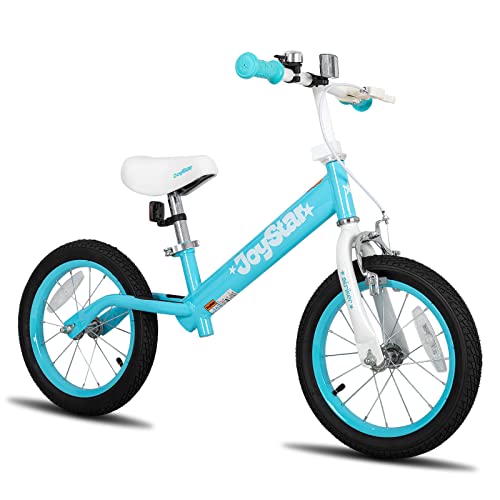
JOYSTAR’s 16-inch balance bike targets kids aged roughly 4–8, offering a larger frame suitable for bigger riders. The bike features a lightweight carbon steel frame at about 13.5 pounds, helping older or taller children maneuver more easily. A front handbrake provides a controlled stopping option, complementing the no-pedal design that emphasizes balance and balance-related confidence. The seat and handlebar are adjustable, with an inseam fit range of 19–25 inches (50–63 cm), enabling a comfortable riding posture as kids grow.
Safety and learning come together in this model through straightforward setup and positive reinforcement for balance practice. The front brake adds an additional layer of control compared with non-brake models, which can be reassuring for cautious learners. As with any balance bike, supervision, proper protective gear, and a safe practice area play critical roles in ensuring a productive and enjoyable learning experience.
Buying Guide
Size and Fit
Start with inseam length and overall height. Look for a seat height range that allows the child’s feet to touch the ground while seated and a handlebar height that keeps the back fairly straight when the rider sits. Adjustable posts with quick-release levers are ideal because they reduce downtime as your child grows. A bike that fits within a wider height range reduces the need to buy a new bike every year.
Adjustability and Growth
Grow-with-me features are valuable for lasting use. Check seat and handlebar adjustability, whether the adjustment uses tools or quick-release bolts, and the maximum height reachable. A bike that can adapt from early walking stages to longer rides helps maximize value and learning continuity for kids who are still developing balance and coordination.
Brakes and Tires
Balance bikes typically emphasize control, with some models including front brakes for older kids who are ready for more stopping power. Pneumatic tires offer better shock absorption and traction on uneven surfaces, while solid tires reduce maintenance. Consider your child’s comfort with braking and the types of terrain you plan to ride on, such as sidewalks, parks, or light trails.
Weight and Durability
A lighter bike is easier to maneuver and less tiring for your child, but a sturdier frame can endure more enthusiastic practice and rougher surfaces. Carbon steel frames strike a balance between durability and weight, while aluminum variants tend to be lighter but may cost more. Look for sturdy clamps, secure wheel attachment, and quality bearings to ensure long-term reliability.
Safety and Comfort
Ensure a secure, rounded frame with smooth edges, non-slip grips, and well-padded seats. A comfortable seating position helps prevent fatigue during longer practice sessions. Protective gear—helmet, knee and elbow pads—should accompany any early biking activity, and adult supervision in appropriate spaces remains essential.
Assembly and Maintenance
Simple assembly and clear instructions reduce setup time. Check for loose bolts regularly, especially after falls or aggressive riding. Keep tires properly inflated for pneumatic models, and inspect brakes (if included) for responsiveness. Regular maintenance slows wear and keeps the bike ride-ready for ongoing learning and fun.