Transforming a regular bicycle into an electric ride is simpler than ever with modern conversion kits. This guide compares five top options designed for American riders who want reliable power, easy installation, and compatibility with common bike frames. Whether you prefer a mid-drive setup for mountain trails or a front-hub motor for quick daily commutes, these kits cover a range of performance, battery choices, and controller features. Read on for concise product snapshots, a quick summary, and a practical buying guide to help you pick the right kit for your bike and riding style.
| Product | Brand | Power | Drive Type | Wheel / BB Compatibility | Battery |
|---|---|---|---|---|---|
| BAFANG Mid Drive Kit | BAFANG | 500W/750W/1000W | Mid-drive | 68-73mm BB | Battery optional |
| PEXMOR Front Wheel Kit | PEXMOR | 1200W | Front hub | 26″ Front Wheel | Battery not included |
| LIVALL PikaBoost 2 | LIVALL | Battery options: 158Wh or 220Wh | Rear hub | Rear wheel integration | Battery included (select model) |
| AW 1000W Front Wheel Kit | AW | 1000W | Front hub | 26″ Front Wheel | Battery not included |
| VEVOR 1000W Front Wheel Kit | VEVOR | 1000W | Front hub | 26″ Front Wheel | Battery not included |
BAFANG Mid Drive Kit 750W 1000W MTB

The Bafang mid-drive kit (BBS02B/BBS-HD) is a versatile option that supports 500W, 750W, and 1000W configurations. It is designed to integrate with bottom brackets ranging from 68 to 73 millimeters, accommodating most mountain and road bikes. The kit commonly includes essential accessories such as brake levers, a chainring, a thumb throttle, a speed sensor, a headlight, and tools, with an LCD display and battery available as optional add-ons. It is compatible with disc or V-brake equipped, chain-driven models, which makes it a strong choice for riders seeking robust torque and reliable performance on varied terrains.
Performance-wise, the BAFANG system delivers high torque suitable for steep climbs and mixed terrain. Torque figures commonly cited (100–160 Nm depending on configuration) translate into strong hill climbing and confident acceleration. Top speeds can reach up to around 45 km/h, depending on the final configuration and local regulations. The kit offers multiple assist modes, including throttle, pedal assist, and standard cycling, allowing riders to tailor power delivery to riding style and conditions.
Practical installation considerations include ensuring the bike uses a compatible 68–73 mm bottom bracket and disc or V-brakes that engage reliably with the mid-drive unit. The manufacturer notes that 73 mm screws aren’t included, so some bikes may require additional hardware. This kit is well-suited for riders upgrading an existing MTB or urban bike to boost performance, with plenty of room for customization through variable power configurations and display options.
PEXMOR Front Wheel Electric Kit

The PEXMOR 48V 1200W front-wheel kit centers on a powerful hub motor designed for 26″ bikes with 100 mm front dropout spacing. The high-output motor provides brisk acceleration and strong on-road performance, with a top speed rated around 36.6 mph (59 km/h) under ideal conditions. The kit includes a three-mode controller that works in Hall effect and non-Hall effect configurations, an LCD display, and a twist throttle, enabling riders to switch between pedal-assist, throttle-only, or mixed modes to suit terrain and fatigue levels.
The controller’s sine-wave design promises higher efficiency and lower noise, contributing to a smoother, more refined riding experience. Pedal-assist systems help reduce rider fatigue on long commutes, while the throttle and presets offer immediate power for confident starts and overtaking. Installation is straightforward on compatible 26″ frames, but riders should verify front-end clearance, braking compatibility, and the weight distribution added by a front-hub motor before upgrading a daily rider.
LIVALL PikaBoost 2 E-Bike Kit

The LIVALL PikaBoost 2 is a rear-wheel e-bike conversion kit offering two battery options: a 158Wh model for shorter trips and a 220Wh model for longer ranges. Installation is designed for round seatposts (25–35 mm), and the system is engineered for quick, tool-light mounting. A notable feature is app-based control, which provides status monitoring and ride data. The kit includes an integrated Battery Management System for safety, and the 220Wh configuration delivers an impressive range in favorable conditions—up to about 70 km, while the smaller battery targets roughly 50 km per charge.
Charging flexibility is highlighted by the kit’s compatibility with a USB-C charger (65W recommended) and straightforward swap-in battery options. This setup emphasizes ease of use and a compact rear-hub footprint, making it a practical option for riders who want a discreet, low-profile electric upgrade without major frame modifications. It is especially appealing for casual riders seeking a balance of range, weight, and simplicity.
AW Electric Bicycle Motor Kit
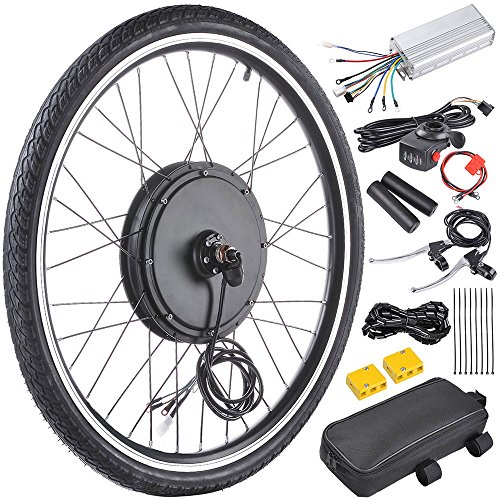
The AW 1000W front-wheel kit uses a 48V, 1000W brushless hub motor designed for efficient, quiet operation. The kit is built for 26″ bikes and is compatible with universal disc or V-brakes, expanding frame compatibility. A notable feature is the thumb throttle with battery-status indicators, which helps riders monitor energy on the go and plan charging accordingly. The aluminum alloy frame contributes to durability and stability, supporting riders up to about 220 pounds. This kit emphasizes reliable performance and a straightforward upgrade path for urban and light off-road use.
Installation practicality is a key advantage, particularly for riders who want a solid upfront motor without the complexity of a mid-drive system. The kit’s front-hub design keeps chainline simple and avoids derailleur complications on single- or multispeed bikes. While battery inclusion varies by package, this kit provides a robust base for converting a daily rider into a more capable electric commuter or weekend explorer.
VEVOR 1000W Front Wheel Kit

The VEVOR 1000W front-wheel kit offers a 1000W hub motor with a 420 rpm rating, delivering strong hill-climbing capability for 26″ bikes. The front-wheel design provides immediate power delivery and is well-suited for commuters who want quick acceleration and reliable performance on mixed terrain. The package includes an upgraded speed controller, a throttle grip with a multi-function display, and a PAS system to enable pedal-assist modes in addition to throttle control. The included LCD display makes it easy to monitor speed, distance, battery life, and assist level.
Riders should consider energy management and frame clearance when planning a front-hub upgrade, as weight distribution changes slightly compared with mid-drive configurations. The copper-core motor design helps with heat dissipation, contributing to durability in longer rides. This kit is a balanced choice for riders who value a straightforward installation, solid power, and a clean front-end appearance on a wide range of city and trail bikes.
Buying Guide
Motor Type And Placement
Choose between mid-drive and hub-motor systems based on bike type and riding goals. Mid-drive kits, located at the crank area, leverage the bike’s gears for efficient climbing and a natural-feeling pedal assist, but they require careful frame and bottom-bracket compatibility. Hub-motor kits place the motor in the wheel hub (front or rear), offering simpler installation and universal wheel compatibility but sometimes less torque on steep hills. For rugged MTB use, a mid-drive often provides better hill performance; for casual commuting, a front-hub kit can be more straightforward to install.
Power And Performance
Power ratings vary from 500W to 1000W (and above in some markets). Higher wattage translates to stronger acceleration and better hill climbing but may be subject to local legal limits. Consider your typical terrain, desired top speed, and range needs when selecting power. Mid-drive configurations commonly deliver higher torque at the crank, while hub motors excel in smooth, consistent power delivery for flatter routes and daily commuting.
Wheel Compatibility And Brakes
Check wheel size, dropout spacing, and brake type before purchasing. Front-hub kits typically fit standard 26″ or 27.5″ wheels with 100 mm front dropouts, while rear-hub options depend on the frame and seatstay clearance. Brakes matter; disc brakes are generally recommended for higher torque systems due to better stopping power. Some kits require specific brake levers or cranksets; verify compatibility with your bike’s brakes, derailleur, and frame geometry to avoid clearance issues or rubbing.
Battery Options And Range
Battery capacity and weight influence range and handling. Many kits offer battery options or allow you to use your own pack. When a battery is not included, plan for a reliable third-party pack that matches the kit’s voltage (commonly 48V) and connector type. Consider your typical ride length and charging opportunities to choose an appropriate capacity, and remember that real-world range depends on terrain, rider weight, assist level, and weather conditions.
Controller, Display, And User Experience
Controllers vary in features, including Hall effect sensors, sine-wave drive, throttle, PAS, and LCD or app-based displays. Sine-wave controllers generally run more quietly and efficiently, while Hall effect support can extend life by managing motor commutation more smoothly. A clear LCD readout or app integration helps you monitor speed, distance, battery life, and assist level. Some kits also offer quick-release or plug-and-play connectors to simplify maintenance and upgrades.
Installation, Maintenance, And Support
Installation complexity ranges from plug-and-play front-hub kits to more involved mid-drive systems requiring crankset, chainline, and bottom-bracket alignment. Maintenance considerations include wheel trueness, brake alignment, and periodic checks of cables and connectors. Look for vendor support, warranty terms, and the availability of replacement parts. If you plan future upgrades or frame changes, choose a kit with flexible options and robust documentation to minimize downtime.
Safety, Legality, And Comfort
Adhere to local regulations regarding motor-assisted speeds and power limits. Wear appropriate safety gear, ensure lights and reflectors are functional, and check that your bike’s weight distribution remains stable after installation. Comfort factors include noise level, ride feel, and how the added weight affects handling. For riders who value stealth and aesthetics, select kits with discreet motor placement and minimal wiring exposure to preserve the bike’s natural look.
In short, the best bike conversion kit for you depends on your bike type, preferred riding style, and how much you value torque, range, and ease of installation. Mid-drive kits excel on varied terrain and climbs, while hub-motor options offer simpler setups and straightforward upgrades. By weighing motor placement, power, battery options, and compatibility with your bike’s frame and brakes, you can select a kit that delivers reliable support and a satisfying riding experience without buying a new bicycle.