Looking for a versatile hybrid electric mountain bike that can handle rough trails while still feeling comfortable on urban streets? This guide highlights five capable models that balance power, range, and ride quality. Each option is suited to different riders—from serious off-road adventurers to daily commuters who want extra assist. The quick comparison below helps you pick the best fit for your terrain and riding style.
Summary table of chosen products
- PUJH 6000W Dual Motor Ebike — Best for: heavy riders and steep, technical terrain
- Jasion EB5 Electric Bike — Best for: daily commuting and versatile terrain with removable battery
- Loeook Electric Bike — Best for: value-focused riders needing reliable city-to-trail performance
- Hoverfly OUREA 26″ — Best for: affordable all‑around trail and city riding
- Misodo Electric Bike — Best for: long-range daily use with strong climbs
PUJH 6000W Dual Motor Ebike

Best for riders who need extreme power and off-road capability. This fat-tire, full-suspension e-bike uses dual 6000W peak motors delivering up to 200 Nm of torque, making steep hills and rocky trails more manageable. The 60V 20Ah battery supports a broad range of 35-110 miles per charge, reducing the need for frequent recharges on long rides. The bike’s 7-level suspension and fat tires provide traction across gravel, mud, snow, and uneven surfaces. Choose this if you regularly tackle challenging terrain or carry heavier loads.
- Best for: heavy riders and rugged off-road terrain
- Caution: high power requires careful handling on tight singletrack and in crowded areas
Jasion EB5 Electric Bike

Best for daily commuting and mixed-terrain weekend rides. The EB5 features a 1000W peak motor and a removable 500Wh battery for up to 25-40 miles per charge, depending on mode. The upgraded LCD display provides ride data, and multiple pedal-assist modes let you tailor power output. Removable battery simplifies charging at multiple locations. Choose this if you want a strong commuter with flexible charging options.
- Best for: versatile urban-to-suburban rides
- Caution: real-world range depends on weight and terrain
Loeook Electric Bike
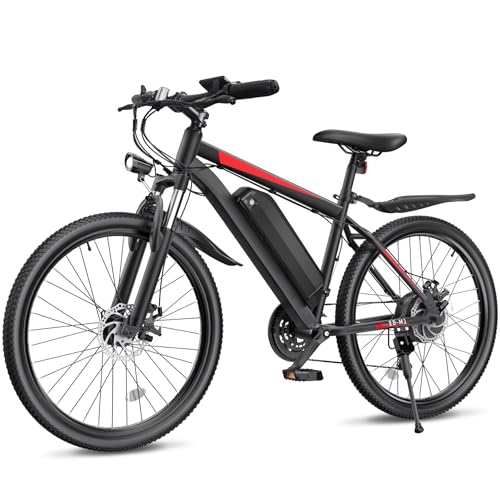
Best for riders seeking a balanced mix of performance and practicality. The Loeook uses a 500W motor (1000W peak) to deliver solid acceleration and up to 20 mph top speed. Its 48V removable battery supports roughly 25-30 miles in full-electric mode and 40-50 miles with pedal assist. Front suspension and a 7-speed setup help manage varied surfaces, while a removable battery adds charging convenience. This is a solid all-rounder for daily commuting and weekend trail rides.
- Best for: reliable everyday riding with occasional trail use
- Caution: range varies with rider weight and air resistance
Hoverfly OUREA 26″ Electric Bike
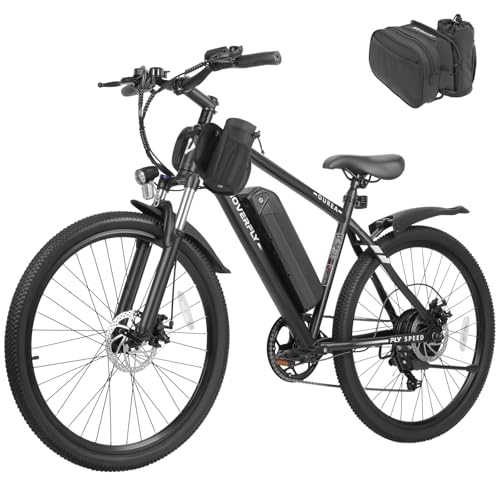
Best for riders who want a capable, mid-range option with removable battery and solid range. The Hoverfly features a 750W motor delivering up to 20 mph and a 374.4Wh battery offering 20-40 miles per charge. The bike includes seven gears and front suspension, making it suitable for hills and light trails as well as city streets. The removable battery adds charging flexibility for office or home use. Choose this if you’re seeking a balance of performance and value.
- Best for: entry-level to mid-range all-terrain riding
- Caution: motor power may feel modest on very steep climbs
Misodo Electric Bike
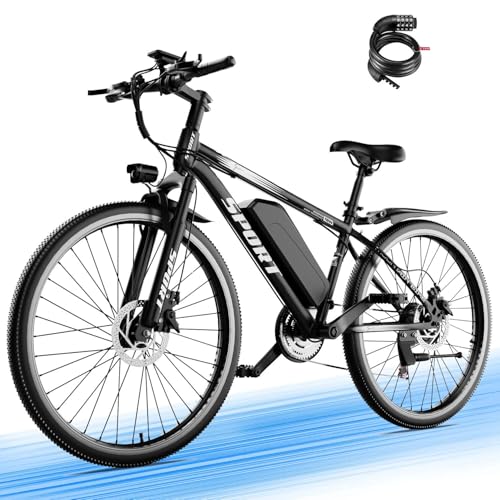
Best for riders who want high power and long-range capability. The Misodo bike uses a 1500W peak motor to reach up to 25 mph and tackle steep grades, paired with a 480Wh battery for 45-65 miles per charge. Dual disc brakes and seven-speed gearing enhance control on varied terrain. This model is well-suited for daily commutes that include hills or longer weekend rides. Caution: higher power may require more careful braking in wet conditions.
- Best for: long-range daily use with strong climbs
- Caution: heavier weight can affect agility on tight trails
Buying Guide: Key Considerations For Selecting A Hybrid Electric Mountain Bike
- Intended riding terrain: Are you mostly on pavement with occasional trails, or do you plan serious off-road adventures? Choose higher torque and larger tires for rough terrain, or lighter, efficient systems for city riding.
- Motor power and torque: Higher peak motors deliver better hill-climbing and load-carrying capabilities. Balance power with weight and control to avoid handling challenges in tight spaces.
- Battery capacity and range: Match battery size to your typical ride distance. Removable batteries add convenience for charging at multiple locations, but consider weight and security.
- Suspension and tires: Front suspension helps with ruts and rocks; fat tires improve traction on snow, sand, or mud. For urban use, lighter wheels can enhance efficiency.
- Braking and safety features: Disc brakes and responsive throttle/pedal-assist levels help manage speed responsibly on varied surfaces.
- Weight and portability: Heavier bikes offer stability and durability but require more effort on stairs or storage. Consider folding or easily stowable options if storage is limited.
- Ease of maintenance: Removable batteries, modular components, and readily available parts can reduce long-term upkeep costs.
Frequently Asked Questions
- What defines a “hybrid electric mountain bike”? — It combines features of mountain bikes (off-road capability, higher torque) with electric assist for smoother, versatile performance on varied terrain.
- Do fat tires improve off-road performance? — Yes, fat tires increase traction on loose surfaces like snow, mud, and sand, but can add rolling resistance on pavement.
- How important is battery range for daily use? — Very important. If you ride daily, a larger range reduces charging frequency; for occasional rides, a smaller range may suffice.
- Is higher motor power always better? — Not always. Higher power improves hill-climbing and acceleration, but adds weight, cost, and potential handling trade-offs in tight spaces.
- Should I prefer removable batteries? — Removable batteries offer flexible charging and the option to carry spare capacity, but ensure secure locking and compatibility with your charging setup.
- What maintenance should I expect? — Regular checks on brakes, tires, drivetrain, and battery health are key. Follow the manufacturer’s guidelines for charging cycles and storage.