Fat tire bikes demand sturdy, space-saving storage that protects wheels and frames while keeping garages and living spaces organized. The best racks for fat tires combine rugged construction, broad tire compatibility, and mounting options that fit different spaces. The selections below cover wall-mounted systems and hitch racks designed to handle up to five-inch tires and substantial loads. They balance durability with convenience for homes, apartments, or shops. Use this guide to compare design approaches, installation needs, and how each option meets common fat-tire storage challenges.
| Product | Type | Tire Width | Capacity | Best For |
|---|---|---|---|---|
| Steadyrack Vertical Fat Tire Rack | Wall-Mount | Up To 5″ | Not listed | Small spaces and easy lift |
| Rambo Aluminum Fat Tire Rear Rack | Rear Rack | N/A | 40 lbs | Extra cargo space on fat bikes |
| CyclingDeal Upright Fat Tire Stand | Two-Way Stand | Up To 4″ | 110 lbs | Versatile vertical or horizontal storage |
| StoreYourBoard BLAT Fat Tire Wall Rack | Wall-Mount | Up To 5″ | 100 lbs (50 lbs per hook) | Two-bike wall storage |
| TANX Fat Tire Hitch Rack | Hitch Rack | Up To 5″ | 160 lbs total (66 lbs per bike) | Two-fat-bike transport and trunk access |
Steadyrack Vertical Fat Tire Rack

Steadyrack Vertical Fat Tire Rack is built from zinc-plated steel and UV-treated polymer, delivering durability and weather resistance in a compact wall-mount unit. It supports fat tires up to five inches wide, making it compatible with most fat bikes and wider cruisers. The design keeps the bike upright, reducing contact with walls and helping protect rims and paint during long storage periods. The combination of corrosion-resistant metal and polymer trim minimizes maintenance while maintaining a clean, minimal look in garages and workshops. It’s engineered to stay reliable year after year.
Its standout feature is the pivot design that makes storage effortless. You simply balance the bike on its rear wheel and push into the rack, which minimizes lifting strain and speeds day-to-day access. The rotating mechanism also helps when maneuvering in tight spaces, letting you re-angle the bike for a clean fit against the wall. This configuration is particularly useful in small apartments, single garages, or shops where floor space is at a premium.
Installation typically requires securing mounting hardware into studs or solid drywall; once mounted, the unit accepts most fat bikes within its width range. The straightforward setup minimizes downtime, helping you reclaim wall space without sacrificing bike security.
Rambo Aluminum Fat Tire Rear Rack

Rambo Bikes Aluminum Bike Rack is designed as a heavy-duty rear rack for fat tire setups, built with a rugged 6061 aluminum alloy frame. It supports a maximum payload of 40 pounds, providing reliable cargo space for accessories, panniers, or additional gear on fat-tire builds. The large carrying surface measures about 18.75 by 15 inches with a 7-inch height, offering ample clearance for wide tires and accessories. Its lightweight aluminum construction makes installation easier on electric bikes or other heavy platforms, while maintaining the durability needed for frequent use in trails or commutes.
Made to fit Rambo bikes and compatible accessories, this rear rack emphasizes modularity. It’s designed to pair with Rambo pannier saddlebags, trailers, and holders, enabling a tailored cargo configuration for camping trips or long rides. The rack’s geometry emphasizes stability and ease of removal, so riders can quickly swap gear without tools on most standard bike frames.
With a focus on strength and compatibility, the aluminum design balances rugged performance with lighter handling, helping fat-tire riders expand cargo options without overloading frame components.
CyclingDeal Upright Fat Tire Stand

CyclingDeal Upright Fat Tire Stand offers a versatile two-way storage solution that lets you park bikes either vertically or horizontally. This flexibility helps reclaim floor space in crowded garages or apartments while keeping wide fat tires elevated and out of the way. The stand is compatible with most bikes using wheel sizes from 26 to 29 inches and tires up to four inches wide, with a weight capacity of 110 pounds, making it suitable for heavy e-bikes. Note that vintage-style rear mudguards may not be compatible.
The design is recognized with an award from the 2022 Taipei Cycle d&I Awards, reflecting attention to protecting drive chains, rotors, handlebars, shifters, and brakes from scratches compared to typical floor stands. The patented structure provides stable, secure storage and reduces risk of damage during mounting and removal. Also, its footprint is compact, making it a convenient option for garages and workshops.
StoreYourBoard BLAT Fat Tire Wall Rack
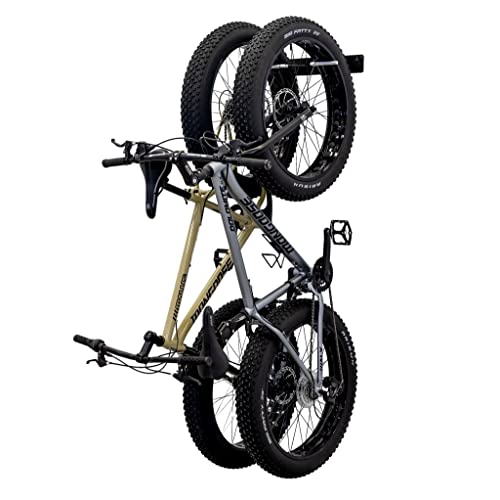
StoreYourBoard BLAT Bike Fat Tire Wall Rack is designed for compact, vertical storage of two fat-tire bicycles on a single wall. This heavy-duty wall rack helps keep your ride lineup organized, free up floor space, and protect tires from contact with the floor and walls. With hooks sized to accommodate wheels up to five inches wide, the system supports wide tires found on fat bikes and some electric fat tires. The rack is built from solid steel and is rated to hold up to 100 pounds across both hooks, with 50 pounds per hook.
The BLAT’s dual-hook design distributes weight evenly and reduces wobble, ensuring stability in hallways, garages, or workshops. Mounting hardware and stud requirements will ensure secure installation, making this a practical solution for homes or shops that store two fat tires side-by-side. Its aesthetic is clean and sturdy, which helps maintain a neat storage area even with frequent bike swaps.
TANX Fat Tire Hitch Rack

TANX Fat Tire Hitch Rack is a robust two-bike rack designed for hitch receivers, with a total capacity of 160 pounds (about 66 pounds per bike). It supports wheel widths up to five inches and is suitable for a broad range of bikes, including fat tires and e-bikes. The rack uses a high-strength alloy steel construction for durability on daily use and road trips. Lockable padded clamps help protect paint and prevent movement on rough roads, while a folding and tilting design provides trunk access without removing the rack. The 2-inch hitch receiver keeps installation straightforward for compatible vehicles.
When installing, verify clearances for tailgates and spare tires, and ensure your hitch is rated for the expected weight and travel conditions. This rack offers space-saving convenience when not in use, and its tilting feature facilitates easy access to cargo without full removal. For owners who frequently transport two fat bikes, TANX provides a balanced blend of security, capacity, and flexibility.
Buying Guide
Key decisions when choosing a fat-tire bike rack involve space, mounting method, weight handling, and protection of your bike’s finish and components. Consider how you store bikes at home versus on the road, and how often you swap or move bikes in and out of storage.
- Mounting style and space: Wall-mounted racks maximize floor clearance and work well in small garages or apartments, but require sturdy wall mounting and space to swing bikes. Hitch racks sit outside of storage space and excel when you need to transport bikes or allow trunk access, though they demand a suitable vehicle receiver and hitch clearance.
- Tire width and wheelbase compatibility: Look for racks rated for up to five-inch tires if you own fat bikes. Note any minimum or maximum wheel sizes and whether fat tires taller than standard rims fit without rubbing or interference.
- Weight capacity: Fat bikes paired with accessories (panniers, racks, or gear) increase load. Choose racks with total and per-bike limits that exceed your combined weight for safe, stable storage or transport.
- Durability and materials: Steel builds resist impact and corrosion with protective coatings, while aluminum tends to be lighter yet strong. UV resistance and powder coatings help protect exterior finishes in outdoor setups.
- Protection and security: Padded clamps, anti-sway features, and scratch-resistant contact points preserve paint and components. Locks or secure mounting can deter theft in shared spaces or garages.
- Ease of installation: Consider whether installation requires studs, specific wall types, or compatible vehicle receivers. Simple, tool-light setups save time and reduce the risk of improper mounting.
- Adjustability and versatility: Racks that offer vertical and horizontal parking or folding/tilting capabilities provide flexibility for multiple bikes and changing storage needs.
- Maintenance and durability: Weather exposure, salt, and humidity can affect outdoor racks. Favor corrosion-resistant coatings and durable hardware that withstands regular cycling and long seasons.
- Budget and value: Compare overall value by weighing durable materials, weight capacity, and versatility against upfront cost and potential replacement parts over time.
How to Choose Between Wall and Hitch Options
Wall-mounted racks save floor space and keep bikes neatly organized, but require sturdy wall anchors and thoughtful placement to avoid interference with doors, windows, or storage items. Hitch racks offer portability and trunk access, making them ideal for vehicles and on-the-go use, but demand a compatible receiver and careful attention to vehicle weight limits. For households with multiple fat bikes or frequent bike swaps, a combination approach—using a wall rack for indoor storage and a hitch rack for transport—can deliver the best of both worlds.