Choosing a racing clutch for a mini bike means matching bore size, chain pitch, and engine power to your build. The five centrifugal clutches below are popular choices for mini bike setups, go-karts, and backyard race projects. They cover common bores (5/8 and 3/4 inch), chain pitches (#35 and #40/41/420), and engines in the low-to-mid horsepower range. Use this guide to compare engagement, fitment, and durability to help select the right clutch for racing-grade performance.
| Product | Brand | Bore | Teeth |
|---|---|---|---|
| FDJ 5/8 Mini Bike Clutch | FDJ | 5/8″ | 11 |
| TEANTECH 5/8 Mini Bike Clutch | TEANTECH | 5/8″ | 11 |
| FDJ 3/4 Mini Bike Clutch | FDJ | 3/4″ | 10 |
| Motovecor 3/4 Mini Bike Clutch | Motovecor | 3/4″ | 10 |
| KRGUOD 3/4 Mini Bike Clutch | KRGUOD | 3/4″ | 10 |
FDJ Go Kart/Mini Bike Clutch 5/8 Bore 11T

The FDJ clutch features a 5/8 inch bore and accepts a #35 chain with a 3/8 inch pitch, paired with an 11-tooth sprocket. It’s designed for single-wheel drive karts with tires no larger than 15 inches tall, making it suitable for small go-kart and minibike builds that push for quick, reliable engagement. The centrifugal mechanism provides consistent power transfer during aggressive riding and racing starts, with a compact footprint that fits many standard belt-drive setups.
- Bore: 5/8″; Chain: #35 (3/8″ pitch); Sprocket: 11T
- Best for: Single-wheel drive mini bikes and go-karts
- Engine range: Suited to small-displacement setups
Ideal as a straightforward upgrade for riders seeking dependable, easy-to-install performance. It integrates well with common parts and requires minimal tuning, making it a practical choice for hobbyists aiming for consistent lap times.
TEANTECH Go Kart Clutch 5/8 Bore 11T

The TEANTECH 5/8 inch bore clutch accepts a #35 chain with an 11-tooth sprocket and is highlighted for broad engine compatibility. It lists fitment for 2–6.5 HP engines (168–188 cc gasoline engines for generators and go-karts, along with Predator 97cc and older 3 HP variants). This versatility makes it a strong choice for hobbyists who mix engines or upgrade go-kart drivelines while maintaining dependable clutch engagement and durability under racing conditions.
- Bore: 5/8″; Chain: #35; Sprocket: 11T
- Engine range: 2–6.5 HP (e.g., 168–188cc class, Predator 97cc)
- Applications: Go-karts and mini bikes
Its wide compatibility and robust build support frequent swapping of engines or tuning for performance, making it a flexible option for evolving miniature race projects.
FDJ Minibike Go Kart Clutch 3/4″ Bore 10 Tooth

This heavy-duty clutch uses a 3/4 inch bore and 10-tooth sprocket designed for #40/41/420 chain. It’s a 212cc Predator belt-drive centrifugal clutch engineered for 2–7 HP engines, featuring a 3/4 inch bore and direct-drive setup suitable for single-wheel applications on minibikes and go-karts with tires not exceeding 15 inches tall. The unit’s rugged construction is intended for more demanding racing environments and tougher terrain.
- Bore: 3/4″; Chain: #40/41/420; Sprocket: 10T
- Engine range: 2–7 HP (212cc Predator engines common in minibikes)
- Drive: Belt Direct, single-wheel
It provides a reliable upgrade path for racers seeking greater torque transfer and durability in more aggressive riding scenarios.
Motovecor Centrifugal Clutch 3/4 Bore 10T 10 Tooth
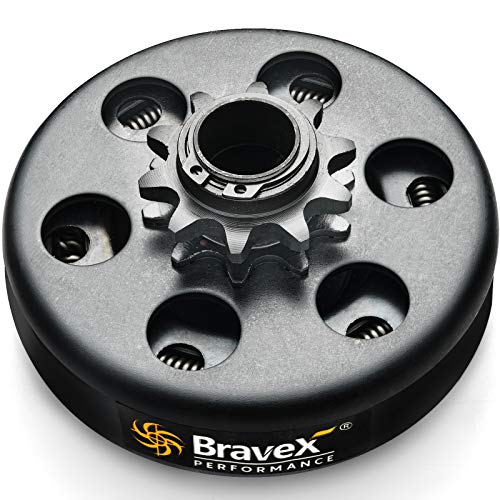
Motovecor’s centrifugal clutch features a 3/4 inch bore with a 10-tooth sprocket designed for #40/41/420 chain. It is suitable for engines up to about 7 HP (engagement around 2300 RPM) and is a common choice for go-karts and Baja mini-bike builds. It lists compatibility with a wide array of cloned engines (GC160, GC190, GX120, GX140, GX160, GX200) and Tecumseh variants, making it a versatile upgrade for many small-displacement racers.
- Bore: 3/4″; Teeth: 10T; Chain: #40/41/420
- Engagement: ~2300 RPM; Engine range: 2–6.5 HP typical
- Compatibility: Go-karts, minibikes, and several clone engines
For racers seeking a balance of ruggedness and broad compatibility, this Motovecor clutch offers straightforward installation and dependable engagement in a variety of setups.
KRGUOD Centrifugal Clutch 3/4 Bore 10T

KRGUOD offers a 3/4 inch bore centrifugal clutch with a 10-tooth sprocket designed for #40/41/420 chain. It’s listed to support 2–6.5 HP engines up to 6.6 HP performance and is compatible with a broad range of mini-bike and go-kart configurations, including Predator 212, Briggs and Tecumseh variants. The clamp-ready design and robust construction aim to deliver consistent engagement and durability for frequent racing sessions on small vehicles with 3/4 inch shafts.
- Bore: 3/4″; Teeth: 10T; Chain: #40/41/420
- Engine range: 2–6.5 HP; Compatibility: Widely used in mini bikes and go-karts
- Durability: Reinforced pads and solid materials for racing use
For builders focusing on flexibility and parts availability, this clutch provides a dependable option across multiple engine brands and mini-bike platforms.
Buying Guide
Key purchase considerations help ensure you get a clutch that matches your mini bike’s power, drive system, and racing goals. Below are practical factors to evaluate when choosing among 5/8 and 3/4 bore clutches, and when deciding between 10T and 11T sprockets.
- Bore size and shaft compatibility: 5/8 inch bores fit many small engines and kits, while 3/4 inch bores suit larger mini-bike and go-kart builds. Check your engine shaft diameter and any required spacers or adapters to ensure a clean fit.
- Chain pitch and compatibility: Clutches are paired with chain pitches such as #35 or #40/41/420. Ensure the chain in your drive system matches the clutch’s pitch to prevent premature wear or slip.
- Teeth count and gear ratio: An 11T sprocket provides different gearing than 10T. Higher teeth counts can improve torque delivery at the cost of top-end speed, which matters for track performance and acceleration.
- Engine horsepower range: Clutches are commonly rated for 2–6.5 HP or up to around 7 HP. Match the clutch to your engine’s peak power and RPM to avoid slippage or sluggish engagement.
- Engagement RPM and behavior: Some clutches engage around 1800–2300 RPM. Consider your engine’s typical RPM and riding style (drag, trail, or circuit) when selecting an engagement point.
- Mounting and drive type: Determine whether your setup uses belt drive or direct drive, and whether the clutch is intended for single-wheel drive. Ensure compatibility with your go-kart frame, clutch cover, and chain tensioning.
- Durability and maintenance: Look for reinforced clutch pads and materials designed to withstand repeated engagement at racing speeds. Availability of replacement parts (pads, springs, and sprockets) can simplify long-term maintenance.
- Compatibility with engine families: Some clutches list compatibility with common clone engines (GC160, GX200, Predator, Tecumseh). Verify the exact engine match for your build and whether any mounting modifications are required.
- Weight and space: Mini bike setups benefit from compact components. Ensure the chosen clutch’s dimensions fit within your chassis clearance and won’t interfere with the wheel or frame.
- Spare parts and support: Availability of replacement parts and retailer support can affect maintenance ease and overall uptime during racing seasons.
Choosing the right clutch involves balancing horsepower, bore size, chain compatibility, and intended use. For smaller, lighter builds with 5/8″ bores, the FDJ and TEANTECH options offer dependable 11T configurations. For more robust, 3/4″ setups that handle higher torque and broader engine options, the Motovecor, FDJ, and KRGUOD choices provide strong performance, ease of installation, and wide compatibility with common clone engines. Consider the track or terrain you’ll race on, and select a clutch that matches your preferred gearing and RPM engagement to optimize acceleration, control, and reliability.