Choosing a rack that carries four bikes requires weighing how you’ll use it—from casual grocery runs to weekend rides with family. The right rack should fit your vehicle, protect your bicycles, and be easy enough to remove when you’re not using it. This guide highlights five widely used 4-bike racks that cover trunk-mounted, hitch-mounted, platform, and hanging designs. Each option is assessed for capacity, security features, and practical use so you can compare performance across common scenarios.
| Product | Brand | Type | Bikes | Notes |
|---|---|---|---|---|
| Allen Sports Deluxe 4-Bike Trunk Mount Rack, Model 104DB-R | Allen | Trunk Mount | 4 | Fits most sedans, hatchbacks, minivans and SUVs; tie-down cradles; extra-wide lower foot. |
| Hollywood Racks Destination 4 Hitch Bike Rack | Hollywood Racks | Hitch Platform | 4 | Max load 35 lbs per bike; includes locking hitch pin; lightweight platform design. |
| Allen Sports Deluxe 4-Bike Hitch Mount Rack (2-Inch Receiver) | Allen | Hitch Mount | 4 | 2-inch receiver; patented tie-down cradle; arms fold; tilts back; no-wobble bolt. |
| Thule Apex XT Hanging Hitch Bike Rack | Thule | Hanging Hitch | 4 | Premium hanging rack; anti-sway cradles; tool-free installation. |
| MaxxHaul 70210 Hitch Mount Bike Rack 4-Bike Rack | MAXXHAUL | Hitch Mount | 4 | Up to 150 lbs total; swing-down feature; reflector; includes hitch pin. |
Allen Sports Deluxe 4-Bike Trunk Mount Rack

The Allen Sports Deluxe 4-Bike Trunk Mount Rack uses a trunk-mounted design to carry four bicycles securely. It fits a wide range of vehicles, including sedans, hatchbacks, minivans, and SUVs, making it a flexible option for daily errands or family outings. The design relies on tie-down cradles and an extra-wide lower foot to distribute weight evenly and help prevent bike movement during transit. Installation is straightforward and does not require a hitch receiver, which can simplify removal when not in use.
Security and stability are achieved through cradles that hold each bike independently, reducing wear on frames. A potential trade-off with trunk mounts is less ground clearance and access to the rear of the vehicle when the rack is installed. Users should ensure their tailgate clears the rack, especially on compact vehicles. The rack includes protective padding to minimize contact with bike frames and reduces vibration on bumpy roads.
Hollywood Racks Destination 4 Hitch Bike Rack

The Hollywood Racks Destination 4 Hitch Bike Rack is a hitch-mounted platform carrier designed to carry up to four bicycles. Its platform style provides a stable surface for each bike, helping to minimize frame contact and distribute weight evenly across the hitch. The rack supports a maximum bike weight of 35 pounds, which helps preserve wheel integrity and reduces sway during transport. An included locking threaded hitch pin adds a level of security against theft and wheel movement while parked.
As a platform-style hitch carrier, this rack tends to be easier to load and unload than some hanging racks, particularly for heavier bikes. The platform design also enables easier wheel removal and better clearance when opening a vehicle’s rear hatch. When not in use, it can be detached from the hitch for storage, though its bulk means some garage or driveway space is required. Users should verify their vehicle’s hitch class and compatibility before purchasing.
Allen Sports Deluxe 4-Bike Hitch Mount Rack

Designed for 2-inch receiver hitches, the Allen Sports Deluxe 4-Bike Hitch Mount Rack emphasizes ease of use and secure transport. Its patented tie-down cradle system secures each bike individually, helping to minimize frame-to-frame contact. The arms fold out of the way when not in immediate use, and the rack tilts back to provide access to the rear of the vehicle without detaching. A no-wobble bolt helps stabilize the entire rack within the hitch, improving overall stability during travel. Minor assembly is typically required, and a durable black powder-coated finish adds weather resistance.
Security features focus on keeping bicycles in place while in transit. The design includes retainers and lanyards to prevent lost parts, addressing common issues with multiple-piece racks. This model suits vehicles with 2-inch receivers and is a practical choice for families who frequently transport four bikes. As with many hitch-mounted units, careful mounting and regular checks during trips are advised to maintain optimal security.
Young 4-Bike Rack Hitch Mount Platform Style Carrier

The Young 4-Bike Rack is a hitch-mounted platform-style carrier designed for cars, trucks, SUVs, and minivans with a 2-inch receiver. This model emphasizes safe and secure transport with soft padded hooks and a locking hitch pin to prevent theft and movement. A rear safety reflector enhances visibility in low-light conditions. The design folds and tilts to allow trunk access, which is especially helpful for loading gear after a ride or during multi-stop trips. The rack supports a total of 160 lbs (40 lbs per bike) as stated in its marketing materials.
Users benefit from a foldable, tilt-back design that saves space when not mounted and facilitates easier loading. The system is built for frames of varying sizes due to a hitch tightener and adjustable frame fit. While platform-style racks are generally sturdy, the overall reliability depends on hitch mounting and proper strap tension. Regular inspection of straps and pins is advised to maintain peak performance.
Thule Apex XT Hanging Hitch Bike Rack

The Thule Apex XT Hanging Hitch Bike Rack is a premium hanging-style rack designed to carry four bikes. It emphasizes bike stability and fit, using anti-sway cradles to minimize contact and sway between bikes. The installation is described as quick and tool-free, which can reduce setup time for weekend trips. Hanging racks typically offer lighter weight and easier access to the vehicle, though bikes may require more careful alignment to prevent frame contact. Thule’s design focuses on protecting bikes during transport while staying user-friendly.
Security for hanging racks often centers on frame contact protection and locking mechanisms. The Apex XT’s anti-sway design addresses common concerns about frame damage and bike-to-bike interference. Users with diverse bike sizes and frame styles may appreciate the adaptability, though some cyclists prefer platform designs for easier loading and unloading of larger or heavier bikes. Regular maintenance of cradle padding and strap tension helps ensure ongoing performance.
MaxxHaul 70210 Hitch Mount 4-Bike Rack
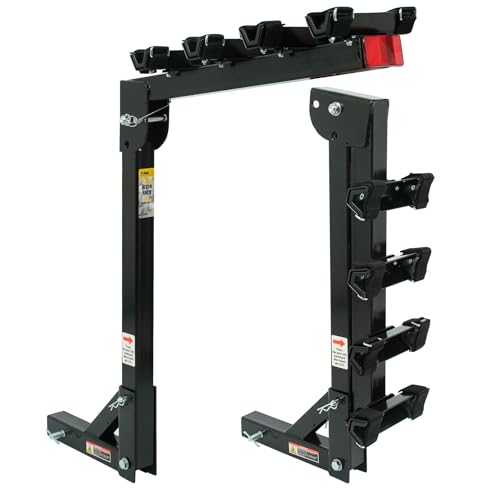
The MaxxHaul 70210 hitch-mount rack is a four-bike carrier built for vans, SUVs, trucks, and sedans with receiver hitches. It supports up to four bikes and a total weight of up to 150 pounds, complemented by a built-in hitch pin for secure attachment. A swing-down feature enables easy rear access to the vehicle when bikes are mounted, which is particularly helpful for loading cargo after parking. The unit also features a reflector, increasing visibility for nighttime travel, and adjustable hold-down straps to secure bikes during transit.
Ease of installation is a notable advantage, with a straightforward setup that makes it suitable for users who frequently switch between vehicles. The swing-down mechanism and durable construction help accommodate a range of bike sizes, though it’s important to verify the compatibility with your specific vehicle’s other accessories and exhaust clearance. Regular checks of the hitch connection and strap tension are recommended for safety and reliability.
Buying Guide
Mounting Type And Vehicle Compatibility
Trunk-mounted racks are typically budget-friendly and easy to install, making them ideal for cars with no hitch or limited access to a hitch receiver. However, they can obscure access to the trunk and may rub lower trim or paint on certain vehicles. Hitch-mounted racks tend to offer better stability and bike protection, especially for four bikes, but require a compatible receiver and can be bulkier to store. When selecting a rack, confirm your vehicle’s hatch clearance, receiver size (1.25″ vs 2″), and whether you need a removable or permanent mounting solution.
Platform Versus Hanging Racks
Platform racks (flat, individual trays) provide strong stability and easier loading for heavy bikes, plus better separation to prevent frame contact. Hanging racks support bikes by the frame and are often lighter and more compact, but can cause more frame-to-frame contact and require careful alignment to protect wheels and derailleurs. For four bikes, a platform-style hitch carrier often delivers the most reliable stability, while a hanging rack may suffice for lighter, compact bikes with frequent loading and unloading.
Weight Capacity And Bike Compatibility
Consider the per-bike weight limit and total rack capacity. Some racks cap each bike at roughly 30–35 pounds, which may rule out heavier mountain bikes without removing components. Others advertise higher totals (e.g., 150 pounds split across four bikes). Also check wheel sizes and frame styles since some hooks or cradles are sized for standard mountain or road frames, while others are more versatile. If you regularly carry children’s bikes or fat-tire bikes, ensure compatibility before purchase.
Security Features And Theft Deterrence
Look for integrated locking hitch pins, cable locks, or locking mechanisms for individual bike cradles. Some models include lanyards to prevent lost parts, while others rely on robust frame contact protection. Security is crucial when parking in urban areas or leaving a vehicle unattended. Evaluate both anti-theft features and how easily you can remove or reassemble the rack when needed.
Ease Of Use, Access, And Storage
Ease of use matters for frequent loading and unloading. Tilt-back or swing-away features improve access to the trunk or rear hatch without removing the rack. Tool-free installation reduces setup time, while some racks require more assembly. Consider how much storage space you have when the rack is not in use; platform racks with a folding design often pack down smaller than full hitch-mounted systems.
Durability, Weather Resistance, And Warranty
Most racks use powder-coated or reinforced steel components to withstand road salt and weather exposure. Check for corrosion resistance on springs, pins, and cradles. A solid warranty can be a deciding factor if you plan to use the rack frequently or in varying climates. Regular maintenance—tightening bolts, inspecting straps, and replacing worn components—extends the life of your rack.
Performance And Real-World Use
In real-world use, trunk mounts excel for occasional rides and limited vehicle options, while hitch-mounted racks tend to provide superior stability for four bikes on longer trips. Platform carriers are often the easiest to load and protect bikes best during transport, but require a hitch and more storage space. For frequent travelers with a mix of bike sizes, a versatile platform hitch model might offer the best balance of stability and convenience. Consider your typical trips, garage space, and how often you will remove the rack.
Quick Comparison
| Aspect | Trunk Mount | Hitch Mount | Platform | Hanging |
|---|---|---|---|---|
| Stability | Moderate; depends on vehicle fit | High; strong, secure | ||
| Bike Protection | Variable; potential frame contact | Good; better cradling options | ||
| Ease Of Use | Low to moderate | High; many are tilt-back or swing-away | ||
| Storage Footprint | Low; no hitch | Moderate to high |
Choosing the right 4-bike rack depends on your vehicle, how you use the rack, and how much you value ease of loading versus maximum protection. The five racks highlighted here provide a spectrum of options—from affordable trunk mounts to feature-rich hitch platforms—so you can align your selection with everyday needs and travel plans. Always verify compatibility with your exact vehicle model, including hitch class, wheelbase, and rear clearance, before purchasing.