Choosing the right electric assist bike kit can expand your riding options, from city commuting to weekend adventures. This guide highlights five top Amazon kits that blend power, reliability, and install ease. Each option is designed to retrofit a standard bicycle into an electric-assisted ride without a professional overhaul. Read on to compare motors, batteries, mounting styles, and practical considerations so you can pick a kit that matches your bike, budget, and riding goals.
| Product | Brand | Battery | Drive Type | Key Benefit |
|---|---|---|---|---|
| LIVALL 220Wh PikaBoost 2 Rear Wheel Kit | LIVALL | 220Wh | Rear Wheel | Quick install with LED & App control |
| AW 48V 1000W Front Wheel Kit | AW | 48V | Front Wheel | High power for rapid acceleration |
| BAFANG 48V 750W Mid Drive Kit | BAFANG | 48V | Mid Drive | Strong hill-torque and modular components |
| Var Strom 1000W Mid Drive Kit | Varstrom | 48V | Mid Drive | Torque sensor with weatherproof design |
| eBikeling 1200W Rear Wheel Kit | EBIKELING | 48V | Rear Wheel | High power, waterproof, rear-wheel setup |
LIVALL PikaBoost 2 Rear Wheel Kit

The LIVALL PikaBoost 2 Rear Wheel Kit attaches directly to the bike’s rear wheel for a clean retrofit with no wiring running through the frame. It includes a 220Wh battery option and a second 158Wh option, delivering up to about 70km (43 miles) or 50km (31 miles) of riding range under ideal conditions. A multi-layer Battery Management System (BMS) enhances safety, and a quick-switch design makes it easy to use the kit as an e-bike or a standard bike. A 65W USB-C charger is required (charger not included), and installation is compatible with round seatposts 25–35mm. The kit also features LED indicators and app control for monitoring on-road performance.
Designed for road and mountain bikes, it emphasizes a compact form factor and straightforward upgrade steps, without needing extensive electrical work. The rear-wheel mounting keeps weight near the bike’s center of gravity, improving handling at speed. Users should verify seatpost diameter before purchase and note that this kit is not intended for children’s bicycles. Overall, the PikaBoost 2 offers a practical entry into e-bike conversion with a strong balance of range, ease, and smart features.
AW 1000W Front Wheel Kit
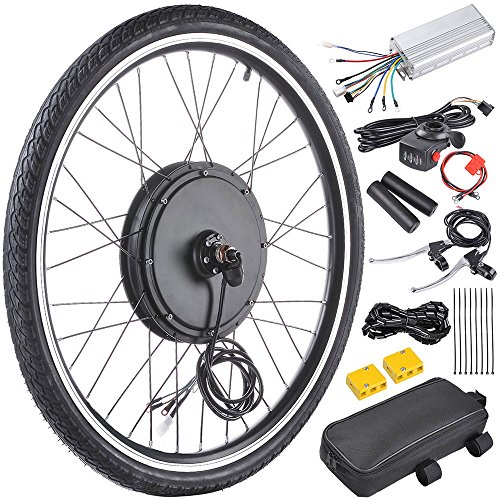
The AW Electric Bicycle Motor Kit uses a 48V, 1000W brushless hub motor in a front-wheel configuration. This setup delivers brisk acceleration and a potential top speed around 45 km/h (27.95 mph). The aluminum alloy frame adds durability and supports riders up to roughly 220 lbs. A single-thumb throttle with three battery-status indicators helps monitor energy use, and the wheel is designed for universal compatibility with 26″ bicycles and standard disc or V-brakes. The kit aims for a simpler, robust upgrade suitable for daily commuting and short trips, with a drive-system that reduces drivetrain maintenance by avoiding a chain drive.
Compatibility notes emphasize that the front hub can be used with most 26″ frames that have appropriate dropout spacing. The kit includes essential components, and its waterproof design helps protect electronics during ride conditions. Potential users should confirm brake compatibility and wheel dimensions before purchasing to ensure proper fitment on their bike.
BAFANG 48V 750W Mid Drive Kit

The BAFANG 48V 750W Mid Drive Kit is marketed as a mid-drive system designed to power the bike from the crank area, delivering pedal-assisted torque with a smooth ride experience. The listing highlights a complete kit including the motor, controller, brake lever, and a throttle, plus a Bafang LCD display, battery, charger, extension cable, and cables. The motor power and speed figures reflect a mid-drive class intended to provide dependable assistance on hills and longer rides, with compatibility for disc brakes. This configuration aims to preserve chainline integrity and offer natural-feeling pedal assist across terrains.
Key considerations include frame compatibility, crankset compatibility, and proper installation alignment to maximize efficiency and longevity. Prospective buyers should verify that their bike’s bottom bracket width and frame dimensions align with the kit’s specifications, and ensure that the display and wiring are positioned for comfortable, safe operation during rides.
Varstrom 1000W Mid Drive Kit

The Varstrom TSDZ2B/TSDZ8/TSDZ16 mid-drive kit combines a powerful mid-drive motor with a precision torque sensor for responsive pedal assistance. It delivers up to a maximum torque of 160 N.m (up to about 1000W class) and includes features designed for all-weather use with IPX5 waterproofing. The kit supports road bikes, mountain bikes, hybrids, and even tricycles with compatible BB widths, making it a versatile option for year-round riding. Four riding modes—E-bike, Pedal Assist, Walk Assist, and Traditional Cycling—let riders choose the level of effort and energy efficiency. It also supports optional EKD01 Bluetooth display for navigation and analytics.
Installation is designed to be plug-and-play with pre-installed cables and included guides, offering a user-friendly experience for DIY enthusiasts. Prospective buyers should consider their bike’s BB width, crankset compatibility, and whether they prefer torque-sensing assistance for a natural ride feel versus a purely cadence-based system. The Varstrom kit is well-suited for riders seeking strong hill-climbing performance paired with intuitive control.
eBikeling 1200W Rear Wheel Kit
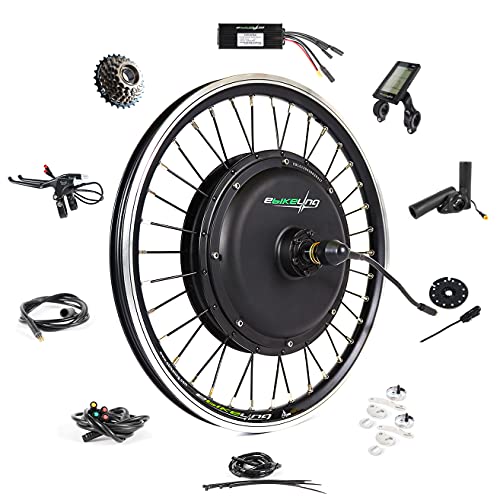
The eBikeling Ebike Conversion Kit is a robust rear-wheel upgrade designed to deliver substantial power with a 48V system and a 1200W motor. It’s marketed as a versatile add-on that can turn a standard bicycle into a high-performance electric ride. The wheel is sized for 20″ bikes, and the kit emphasizes a waterproof design for reliable operation in varying weather conditions. Included components typically cover the motor, controller, throttle, cables, and required mounting hardware, streamlining the assembly process for DIY installers.
Considerations for buyers include wheel compatibility, frame clearance, and the weight of the motor assembly. While a 1200W setup offers strong performance, it may require careful handling for beginners and attention to safety and local e-bike regulations. The eBikeling kit serves well for riders seeking a bold boost in acceleration and top-end speed on urban commutes or technical rides where space and weight are tolerable trade-offs.
Buying Guide
Choosing the best electric assist kit involves balancing motor type, power, battery capacity, bike compatibility, and intended riding style. Below are key considerations and how they typically compare across hub and mid-drive designs:
- Motor placement and type
- Rear hub or front hub kits are generally easier to install and less invasive to the bike’s drivetrain. They offer straightforward upgrades and are suitable for riders prioritizing simple installation and a balanced weight distribution.
- Mid-drive kits sit near the bottom bracket, often delivering superior hill-climbing torque and a natural pedal feel because power passes through the drivetrain. They are ideal for varied terrains but require more precise installation and alignment.
- Power, torque, and top speed
- Higher wattage (e.g., 1000W+ or 1200W) translates to stronger acceleration and better performance on inclines, but may have regulatory implications in some jurisdictions. Torque values (when listed) indicate how well the kit handles hills and heavy riders.
- Mid-drive systems typically provide higher total torque at the crank, improving climbing efficiency, while hub motors focus on smooth, steady power.
- Battery capacity and range
- Battery capacity is measured in watt-hours (Wh). Higher Wh generally means longer range, but real-world range depends on rider weight, terrain, assist level, and speed.
- Consider whether you need multiple battery models, as some kits offer a choice of Wh options (for example, 220Wh vs. 158Wh) to balance weight and range.
- Bike compatibility and installation
- Wheel size and dropout spacing affect hub kits; BB width and crankset compatibility affect mid-drive kits. Check frame clearance, brake type (disc vs rim), and whether the kit’s wiring can be routed cleanly along the frame.
- Disc brake compatibility is common in modern kits, but confirm brake types and lever integration to avoid interference with braking performance.
- Controls, display, and sensors
- Some systems include throttles, while others rely on pedal-assist sensors with torque or cadence inputs. LCD or Bluetooth displays help monitor speed, mileage, battery life, and settings.
- Torque-sensor mid-drive systems provide a more natural ride feel, adjusting power based on pedaling effort, whereas cadence-based systems respond to pedal rotations.
- Durability and weather resistance
- Look for IP ratings (e.g., IPX5) and weatherproof wiring in mid-drive and hub kits, especially if you ride in wet or dusty environments.
- Quality materials, soldered connections, and protective housings help reduce degradation from vibration and weather exposure over time.
- Installation effort and maintenance
- Hub kits are typically faster to install but may require wheel trueing after mounting. Mid-drive kits demand careful alignment and sometimes professional setup for optimal performance.
- Availability of spare parts, service support, and warranty terms are important for long-term reliability.
- Legal considerations
- Power limits, top speeds, and classifications vary by country and state. In the U.S., many kits fall under consumer e-bike rules that define maximum wattage and speed limits for different classes. Always verify local regulations before upgrading.