Choosing the best lightweight 14-inch bike for a young rider blends safety, ease of use, and long-term value. The models highlighted here emphasize low weight, adjustable fit, and durable construction—perfect for ages roughly 2 to 6 years. Each option fosters balance and confidence while remaining easy for parents to carry or maneuver. Below you’ll find five of the lightest 14-inch balance bikes, with quick specs to help you compare at a glance.
| Product | Brand | Weight | Adjustability | Tires |
|---|---|---|---|---|
| Blue 14-Inch Balance Bike | bicystar | 8.5 lbs | Seat 13-21 in; Handlebar 21.6-24 in | Air rubber tires |
| Ridego 14-Inch Balance Bike | Ridego | 8.16 lbs | Adjustable seat; up to 110 lbs capacity | Air rubber tires |
| Pink 14-Inch Balance Bike | bicystar | 8.5 lbs | Seat 13-21 in; Handlebar 21.6-24 in | Air rubber tires |
| Green 14-Inch Balance Bike | bicystar | 10 lbs | Seat 15-22 in; Handlebar 25-28 in | Air rubber tires |
| Black 14-Inch Balance Bike | bicystar | 8.5 lbs | Seat 13-21 in; Handlebar 21.6-24 in | Air rubber tires |
Blue Bicystar 14-Inch Balance Bike

Lightweight design anchors this balance bike as a popular entry point for little riders. Weighing only about 8.5 pounds, it stays easy to lift and control as kids practice balance. The bicycle is designed for ages 3 to 6, with an adjustable seat height from 13 to 21 inches and handlebar height from 21.6 to 24 inches. Its pedalless frame is paired with air-filled tires to cushion bumps and improve stability. A foot rest supports the rider’s stance during transitions to pedaled bikes, making it a durable first step into independent riding.
The bike emphasizes a compact, easy-to-handle footprint without sacrificing durability. Parents appreciate the straightforward assembly and the ability to grow with a child’s skill. With a lightweight frame, this model is well-suited for quick trips to the park or neighborhood rides, helping youngsters build confidence before they graduate to a conventional bicycle.
Ridego 14-Inch Balance Bike

The Ridego model is built for tiny explorers aged 2 to 6, designed to spark confidence with no pedals. Weighing roughly 8.16 pounds, it’s easy for caregivers to lift and maneuver. The glass-reinforced nylon frame blends strength with lightness, supporting up to 110 pounds. The 14-inch air-filled tires absorb irregular surfaces, providing a smoother ride across sidewalks, grass, and gravel. The bike’s weight and durable construction make it a reliable choice for families seeking a long-lasting option that stays nimble as a child grows.
Key features include adjustable seating and handlebars to accommodate growing kids, plus a streamlined, pedal-free design that encourages natural balance development. The combination of light weight and robust tires makes it suitable for day trips and family outings, while the simple setup helps minimize time spent on assembly and maintenance.
Pink Bicystar 14-Inch Balance Bike

This pink version mirrors the blue model’s lightweight approach with an approximate 8.5-pound frame. It is designed for ages 3 to 6, offering an adjustable seat height of 13 to 21 inches and a handlebar height between 21.6 and 24 inches. The balance bike uses air-filled tires for better traction and stability on varied surfaces, complemented by a pedal-free setup that encourages early balance memorization. The included foot rest supports proper riding posture during early practice.
Durability and ease of use are central to its design. The color option adds visibility and appeal for children who enjoy vibrant gear. As kids gain confidence, the bike supports longer rides and more adventurous explorations, helping to bridge the gap to pedal bikes with a smooth, confidence-building transition.
Green Bicystar 14-Inch Balance Bike
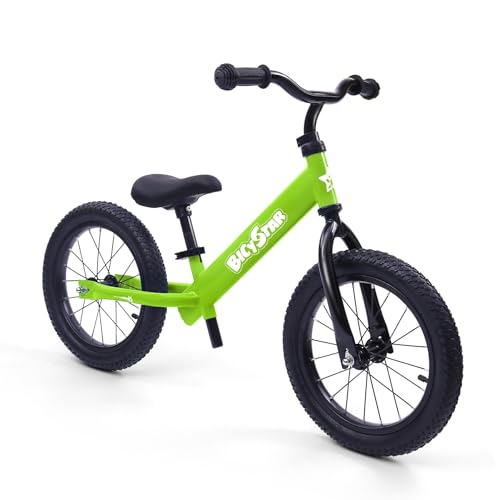
The green model introduces a slightly heavier frame at around 10 pounds but scales up the adjustability to match a child’s growth. Suitable for ages 3 to 6, the seat range spans 15 to 22 inches while the handlebar rises from 25 to 28 inches. This broader range supports taller children and longer riding sessions. The balance bike relies on air-filled tires to help absorb bumps and maintain traction on varied terrains, making it adaptable for sidewalks, driveways, and light trails.
Durability remains a priority, with sturdy construction designed to withstand active play. The larger adjustment range helps children feel secure as they stretch toward longer rides, enabling them to develop balance and coordination without frustration or frequent readjustments.
Black Bicystar 14-Inch Balance Bike

The black variant matches the core Bicystar balance bike lineup with an 8.5-pound frame and an age range of roughly 3 to 6 years. It features an adjustable seat height of 13 to 21 inches and a handlebar height of 21.6 to 24 inches, enabling a snug fit for growing children. The tires are air-filled for better shock absorption and grip, while the pedalless design encourages early balance practice. The combination of lightness and adjustable fit makes this a versatile option for daily use and family outings.
With a focus on simplicity and reliability, this model is well-suited for first-time riders who need a dependable balance bike that can evolve as they gain confidence and balance skills. Its lightweight frame reduces fatigue during longer sessions and ensures easy handling by both kids and caregivers.
Buying Guide
When selecting a lightweight 14-inch balance bike, several factors influence long-term value and rider comfort. The following considerations help summarize what matters most for durability, fit, and growth potential.
Key purchase considerations
- Weight and ease of handling: Lighter bikes are easier for small children to lift and maneuver, which reduces frustration and encourages longer play periods.
- Adequate adjustability: A wide seat and handlebar range accommodates growth from toddlers to early elementary riders, extending the bike’s usable life.
- Tire type and traction: Air-filled tires provide better shock absorption and grip on varied surfaces, improving rider confidence on sidewalks and lawns.
- Pedal-free design: Balance bikes teach core balance skills before pedaling and transitioning to a standard bike, reducing fall risk during early rides.
- Frame material and durability: A sturdy frame that resists scratches and dents stands up to active children while remaining light enough to carry.
How to compare models
- Weight and liftability: Compare the bike’s weight to ensure it’s manageable for your child. A few pounds difference can affect daily use.
- Adjustability range: Look for wider seat and handlebar ranges to accommodate growth without needing a new bike.
- Brake or coasting features: Most balance bikes omit pedals and brakes, but some models include limited coaster-like features for added control early on.
- Tire quality and maintenance: Air tires offer better ride comfort but require periodic inflation. Foam tires require less maintenance but may offer less grip in some conditions.
- Manufacturing consistency and warranty: Reputable brands with accessible customer support help address any fit or durability concerns as kids grow quickly.
In the end, the best lightweight 14-inch balance bike balances weight, adjustability, and comfort. The five models above provide reliable options with strong reputations for helping kids learn balance, coordination, and independence. Consider your child’s height, growth trajectory, and typical riding surfaces when choosing the model that best fits your family’s needs.