Choosing the right rear tire can dramatically improve traction, stability, and confidence on rough trails. This guide reviews five top options that balance puncture resistance, tread design, and compatibility for common mountain bike setups. Whether you ride aggressive descents, cross-country runs, or mixed terrain, the right rear tire helps you maintain control when you needed most.
Rear tires face unique demands: braking grip on loose surfaces, mud shedding, and durability to withstand sharp rocks and roots. The selections below cover sizes from 26 to 29 inches and include tires with Kevlar protection, rugged treads, and tubeless-ready design. Use the table below to compare core features at a glance, then dive into individual sections for detailed specs and usage notes.
| Product | Size | Key Benefit |
|---|---|---|
| Schwinn 29-Inch Mountain Tire With Kevlar Guard | 29 x 2.25 | Kevlar puncture guard and aggressive tread for rough trails |
| WTB Velociraptor Rear Tire 26×2.1 | 26 x 2.1 | Rear-specific tread with wide knobs for braking grip |
| Kulifoo Mountain Bike Tires 26×1.95 (2-Pack) | 26 x 1.95 | Puncture-resistant with inner tubes and levers included |
| Schwinn Replacement Bike Tire 26×1.95 | 26 x 1.95 | Wide blocky knobs for traction on loose or rocky terrain |
| Continental Cross King ShieldWall 29×2.2 | 29 x 2.2 | Three-layer puncture protection with Tubeless Ready casing |
Schwinn 29-Inch Mountain Tire With Kevlar Guard

This 29-inch Schwinn tire features a Kevlar layer reinforcement for exceptional puncture resistance and flat prevention. The durable steel bead contributes to long-lasting performance, while the aggressive tread pattern delivers strong traction on rough terrain. Designed as a replacement for 29-inch mountain bikes, it emphasizes durability and steady handling across varied surfaces, making it suitable for riders who prioritize protection and control in off-road settings.
WTB Velociraptor Rear Tire 26×2.1

This rear-specific tire emphasizes traction with wide-spaced knobs designed to bite into the trail during braking. Built for off-road performance, its DNA compound provides grip on dirt and rocky surfaces, while the wire bead keeps the tread secure on rugged rims. The Velociraptor balances grip and durability, making it a solid choice for riders who prioritize predictable handling on technical descents and loose terrain.
Kulifoo 26×1.95 Mountain Bike Tires (2-Pack)

These 26×1.95 tires come in a 2-pack with two inner tubes and tire levers, offering strong value for riders who want spares. The tires use Thai natural rubber for durability and traction across mud, rocks, and trails. A reinforced puncture-resistant layer protects against sharp debris, and the included inner tubes provide reliable sealing. The setup is well-suited for riders who value quick repairs and ready-to-ride configurations for weekend adventures.
Schwinn Replacement Bike Tire 26×1.95
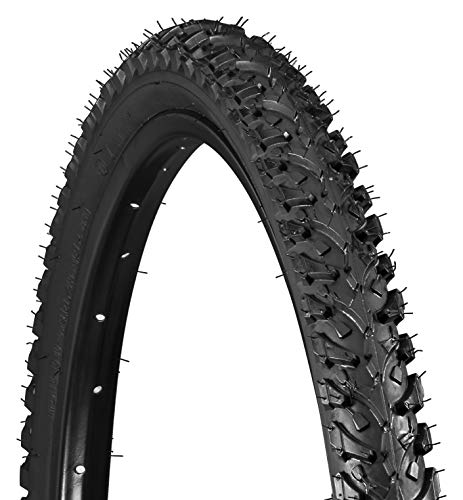
This 26 x 1.95 Schwinn tire is built for all-terrain riding with wide, blocky knobs that boost traction on loose and rocky surfaces. It is compatible with internal rim widths from 19mm to 29mm and offers a robust PSI range to support varied riding styles. The tread design focuses on grip and stability, aiding riders who navigate mixed terrain where reliable control is essential.
Continental Cross King ShieldWall 29×2.2

The Continental Cross King ShieldWall tire is designed for versatile surfaces with a focus on puncture protection. Its three-layer Tubeless Ready-enabled casing enhances durability and allows for tubeless setups, providing lower risk of flats on rough trails. The tire’s profile supports smooth rolling and dependable grip, making it a solid option for riders seeking reliable performance across a variety of trail conditions.
Buying Guide
Rear Tire Sizing and Rim Compatibility
Match tire size to your wheel diameter and rim internal width. Common MTB sizes include 26″ and 29″ with varying width compatibility. Check rim width—internal widths around 19–29 mm are typical—and ensure the tire’s width fits your frame and fork clearance. Tubeless-ready and wire bead vs folding bead affect weight and ease of installation, especially when running lower pressures for traction.
Puncture Protection Vs. Rolling Resistance
Tires with puncture protection (Kevlar layers or reinforced casings) reduce flats on rough terrain but may add weight and slightly alter feel. If you ride rocky trails or frequently encounter thorny debris, prioritize puncture resistance. For riders who prefer speed on smoother sections, a lighter, less protected tire may reduce rolling resistance but increase puncture risk.
Tread Pattern And Traction For The Rear Wheel
Rear tires benefit from tread designed to maximize braking traction and stability, especially on loose surfaces. Aggressive, widely spaced knobs shed mud efficiently and resist packing. Consider whether you ride steep climbs, loose scree, or wet roots, and choose a tread geometry that prioritizes rear braking grip without sacrificing front-end control.
Bead Type And Tubeless Compatibility
Folding beads (often labeled as “folding”) are lighter and easier to mount than steel beads, improving ride feel slightly via reduced weight. Tubeless-ready casings allow sealant to form a pinhole-free ride, enabling lower pressures for better traction while reducing pinch flats. If you run tubes, ensure inner tubes are compatible and available for your rim width.
Two-Pack Value Versus Single Tires
Some manufacturers offer tires in a two-pack with inner tubes and levers, delivering better upfront value and ready-to-use repair options. This can be attractive for riders who want spares or are building a new setup. Compare long-term costs, weight, and the included components to decide if a bundled option suits your riding style.
Rider Type And Terrain Profile
Trail riders and all-mountain riders often prioritize robust puncture protection and reliable braking traction. Cross-country riders may favor lighter tires with lower rolling resistance. Consider your typical terrain, climate, and how often you encounter mud versus dry, loose soil. A tire that performs well in your common conditions will yield the best outcomes over the long term.