Efficient cable management on a mountain bike reduces wear, improves shifting and braking performance, and delivers a cleaner, lighter ride. The right organization keeps cables away from moving parts, protects them from dirt, and makes maintenance faster. This guide highlights five high-value products that address common cable-management challenges—from internal routing and cable housings to protective sleeves and end caps—helping riders keep their bikes running smoothly on dirt trails and rugged terrain.
| Product | Brand | Use |
|---|---|---|
| HOUSON Aluminum C-Clips for MTB Cables | HOUSON | C-clips to secure cables on frames/forks |
| Boao Transmission Line Kit | Boao | Cable and brake cable replacement kit |
| Jagwire Mountain Shop Kit | Jagwire | Cable housing and wire set for MTB |
| KIEVODE Cable Routing Tool Kit | KIEVODE | Internal routing for frames |
| Moxita Cable Sleeve Split Loom | Moxita | Split wire loom for cable protection |
HOUSON Aluminum C-Clips For MTB Cables

This kit includes 10 aluminum C-clips designed to secure bicycle cables along frames and front forks. The clips are lightweight and resistant to corrosion, making them suitable for rugged rides and frequent maintenance. The C-clips attach cable tubes securely to the frame, helping to keep housings tidy and out of the way of moving components.
- Package: 10 pieces for multiple cables
- Material: Aluminum for durability and corrosion resistance
- Application: Attaches cable tubes to bicycle front forks and frames
In practice, these clips simplify internal routing along the fork and frame, reducing cable snags on rough trails and facilitating future service work. They are particularly useful for riders who prefer a clean, understated cockpit without loose cables flapping during descents.
Boao Transmission Line And Brake Cable Kit
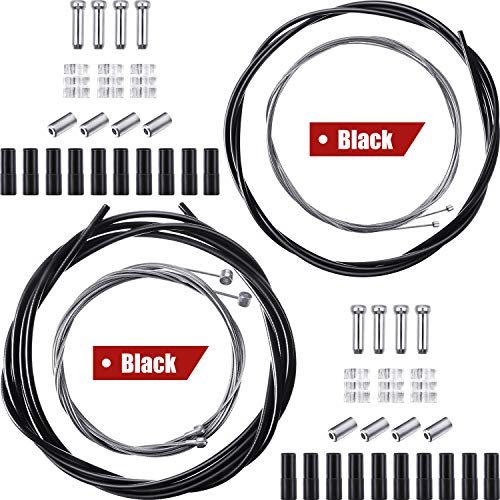
This universal kit provides both derailleur and brake cables, with heat- and rust-resistant PVC and stainless-steel components. It includes a 2-meter transmission cable housing (4 mm thickness), front length of 1.55 meters, and rear inner wire of 2.2 meters, adjustable to fit your bike setup. The brake cables use a 2.5-meter housing (5 mm thick) with front and rear lengths of 1.1 meters and 1.8 meters respectively, designed for durability and consistent performance.
- Quality materials: PVC and stainless steel
- Durable, heat- and rust-resistant construction
- Fully adjustable through multiple lengths to fit MTB or road bikes
- Includes front and rear cable housings and inner wires
For riders performing routine cable replacements or upgrades, this kit provides a complete baseline set to refresh shifting reliability and braking efficiency. It’s especially helpful when upgrading components or restoring older bikes where existing cables have degraded.
Jagwire Mountain Shop Kit

The Jagwire Mountain Shop KIT provides a complete shifter and derailleur cable and housing solution for MTB setups. It includes 2.0 meters of L3 cable housing (4 mm) with Lex-L3 slick-lubed lining for smooth runs and reduced friction. It also provides 2.3 meters of galvanized shifter cables and all necessary end caps and cable tips to finish jobs cleanly. This kit is ideal for riders performing regular maintenance or full drivetrain upgrades.
- L3 cable housing: 2.0 m x 4.0 mm, Lex-L3 reinforced and lubed
- Shifter cables: 2.3 m x 1.2 mm (galvanized)
- Includes end caps and cable tips for complete assemblies
With these components, riders can rebuild or upgrade their MTB drivetrain to achieve precise shifts and reliable braking. The kit supports standard MTB drivetrains and is suitable for workshop use or field repairs on the trail.
KIEVODE Cable Routing Tool Kit

The KIEVODE Cable Routing Tool Kit simplifies inside-frame wiring for modern bikes. It is designed for universal compatibility with carbon fiber, titanium, and aluminum frames, handling 4- to 5.5-millimeter cable housing inner wire, hydraulic hoses, and Di2 e-tube. The kit focuses on ease of installation and reducing time spent threading cables through frames, which is especially valuable for complex frame geometries and newer e-bike setups.
- Easy installation to save time and effort
- Universal compatibility with 4–5.5 mm housing and various frame materials
- Versatile fittings to accommodate different housing and wire applications
Riders working on internal routing projects can leverage this kit to streamline the process, particularly when upgrading or building custom setups where clean routing is essential for performance and aesthetics.
Moxita Cable Sleeve Split Loom

These split cable sleeves offer a straightforward solution for bundling and protecting multiple cables. The sleeve is 1/2 inch in diameter and 10 feet long, with a split design for easy insertion of wires. It can be cut to length and is designed to protect cables from dust, debris, and pet interference. The sleeve temperatures range from -103 to 257°F, and it is UL Recognized, making it suitable for use in a variety of environments and applications beyond bikes, including electronics and audio setups.
- Size: 1/2 inch diameter, 10 feet long; cut-to-length flexibility
- Split design for easy insertion of cables
- Temperature range suitable for varied environments; UL Recognized
- Protects cables from dust, damage, and wear
For riders who want a scalable solution to organize multiple cables under the frame or along the handlebar area, this sleeve provides a durable, adaptable option that can be trimmed to fit and used across different setups.
Buying Guide: Key Cable-Management Considerations for Mountain Bikes
Choosing the right cable-management products depends on bike type, riding style, and maintenance preferences. The following considerations help buyers compare options and select gear that improves performance and longevity without adding unnecessary complexity.
- Internal routing vs external routing: Internal routing creates a clean look and reduced drag, but requires routing tools and careful installation. Kits that support 4–5.5 mm housings and Di2/e-tube are particularly helpful for modern frames.
- Component compatibility: Check that cables, housings, and end caps match your drivetrain (Shimano, SRAM, or other brands) and frame material. Universal kits provide flexibility, but precise sizing matters for smooth operation.
- Durability and materials: Aluminum clip solutions resist corrosion and wear; stainless steel and PVC components offer long-lasting performance under variable weather conditions. For protectors, UL-recognized sleeves add reliable protection.
- Completeness vs upgrade paths: A full kit with housing, inner wires, end caps, and tips simplifies installation. If you already have some components, consider modular options to fill gaps as needed.
- Protection and cleanliness: Split sleeves and cable-end caps help prevent fraying and cable wear, while C-clips and routing tools reduce snag points and improve trail performance.
- Ease of installation: Tools and guided kits reduce the time required for routing and replacement. For beginners, kits with explicit installation features are beneficial.
- Maintenance and future upgrades: Choose products that accommodate future upgrades, such as biodegradable end caps or easier access for future cable swaps during trail maintenance.
- Budget and value: Consider how frequently you service cables. A mid-range kit with dependable parts may offer the best balance of cost vs. longevity for casual riders, while enthusiasts may invest in premium routing tools.
In summary, effective mountain bike cable management rests on choosing compatible, durable components and tools that suit your bike’s frame, drivetrain, and riding style. Whether you’re tidying exposed cables on an all-mountain rig or installing an internal routing system on a carbon frame, the right kit can save time, reduce wear, and improve overall performance on challenging trails.