Maximizing outdoor space while protecting bicycles from the elements requires vertical storage that is both sturdy and adaptable. This guide highlights five top-performing options designed for outdoor or semi-outdoor use, including freestanding racks, wall-mounted systems, and gravity stands. All are chosen for reliability, ease of installation, and space-saving vertical design that keeps pathways clear and equipment organized. Whether you park a road bike, a mountain bike, or several bikes in a tight shed or garage, these solutions offer practical storage without clutter.
| Product | Brand | Type | Notable Benefit |
|---|---|---|---|
| Sttoraboks Vertical Bike Stand | Sttoraboks | Freestanding Indoor Bike Stand | 360° lockable wheels for easy repositioning |
| Yes4All Freestanding Bike Storage Rack | Yes4All | Freestanding Vertical Rack | Very high weight capacity and adjustable height |
| Ultrawall Freestanding Bike Rack | Ultrawall | Freestanding Vertical Rack | Holds up to four bikes with solid steel construction |
| Delta Michelangelo 2 Bike Storage Rack | Delta Cycle & Home | Gravity Free-Standing Rack | No mounting required; space-saving vertical design |
| monTEK Swivel Bike Wall Mount | monTEK | Wall-Mounted Swivel Hanger | 150° swivel for easy access and flush wall storage |
Sttoraboks Vertical Bike Stand

The Sttoraboks vertical stand is designed for freestanding indoor use and requires no wall drilling, making it ideal for renters or spaces where wall damage is undesirable. It features four 360° lockable rolling wheels, enabling easy movement between rooms or storage spots. The design emphasizes stability to prevent tipping while loaded bikes rest securely on the lifting and retracting rods. It supports wheel sizes from 24″ to 29″ and bikes up to 55 lb (25 kg). The height is adjustable to fit different frame configurations. Note: It may not work with bikes equipped with fenders, baskets, or mounted stands.
This rack is especially practical for garages, apartments, or patios where you want a tidy bike display without permanent alterations. With its quick-assembly design, setup takes only minutes using the included instructions. The freestanding, non-damaging approach helps protect walls while keeping gear accessible and organized. Users should consider the weight and wheel width of their bikes to ensure full compatibility with the adjustable lifting mechanism and to avoid overloading the stand.
Yes4All Freestanding Bike Storage Rack

The Yes4All freestanding bike rack emphasizes robust construction with a high overall weight capacity. It can securely hold up to 300 pounds across multiple bikes, making it a strong option for households with heavier mountain or tandem bikes. The rack uses a matte black powder coat that resists scratches and corrosion, helping it withstand outdoor or semi-outdoor environments. An important feature is its adjustable height, ranging from 20 to 76 inches, allowing the rack to accommodate various bike sizes and configurations. Assembly is straightforward with included instructions, and the design aims to maximize space efficiency in garages or outdoor sheds.
The rack’s layout supports vertical storage while keeping wheels and frames accessible for daily use. Rubber-coated hooks help protect rims and tires from scuffs during placement. While the unit is designed for durability, users should confirm that bikes’ tires and rims fit within the rack’s hook spacing and that the outdoor environment won’t expose metal components to excessive moisture without protection.
Ultrawall Freestanding Bike Rack

The Ultrawall freestanding bike rack is built to store bikes vertically without wall or ceiling mounting. Its heavy-duty steel construction provides long-term stability, and the unit includes four welded hooks capable of supporting up to 100 lbs each. This makes it suitable for households with multiple bikes or heavier frames. The vertical design conserves floor space, helping to keep garages or sheds clean and organized. The freestanding format also allows flexible placement in outdoor-covered areas where a wall installation isn’t feasible.
For outdoor suitability, consider the rack’s finish and any exposure to rain or UV light. While metal components offer strength, periodic maintenance such as cleaning and occasional lubrication can help prevent rust on moving parts and ensure smooth operation. It’s a practical option when you need to maximize storage without drilling into walls or concrete.
Delta Michelangelo 2 Bike Storage Rack
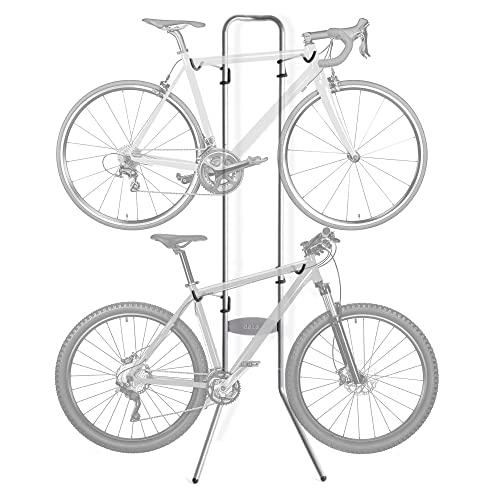
The Delta Michelangelo gravity stand is a gravity-lean, free-standing solution that requires no mounting or drilling. It safely suspends bicycles using a vertical, space-saving design that accommodates one or two bikes up to a combined 80 lbs (40 lbs per bike). The unit’s dimensions (84″ x 26″ x 16″) reflect a tall, slender profile that fits into compact areas such as small garages or apartment storage spaces. The arms are fully adjustable to fit different bike frames, and the powder-coated steel finish adds durability and a polished look for indoor or protected outdoor spaces.
Because this stand relies on gravity and a lean design, it’s important to ensure a stable floor surface and level positioning to prevent tipping. The product provides a stylish alternative to wall mounting and is particularly suitable for renters or spaces where holes in walls are not desirable. The stand’s footprint is reduced, but users should verify bike dimensions to ensure a proper fit for their collection.
Buying Guide: Key Purchase Considerations and Comparisons
- Storage Type: Freestanding racks offer portability and zero-wall installation, ideal for renters or flexible layouts. Wall-mounted and gravity stands provide compact, space-efficient options but require more precise placement and, in some cases, mounting hardware or wall anchors.
- Bike Capacity and Weight: Check the total load capacity and per-bike weight limits. Heavier bikes or multiple bikes may require sturdier frames and wider base footprints, as seen in Yes4All and Ultrawall options.
- Number of Bikes: If you own several bikes, a four-bike rack like Ultrawall or a multi-bike freestanding unit may maximize vertical space best. For smaller collections, gravity stands and wall mounts can be sufficient.
- Adjustability: Look for adjustable arms or height settings to accommodate different frame sizes, wheelbases, and tire widths. The Sttoraboks and Yes4All models highlight adjustable features that improve fit across bikes.
- Wheel Compatibility: Some designs support specific wheel widths (e.g., up to 4″ tires). Ensure the rack accommodates your bike types, especially if you ride fat tires or bikes with fenders that may clash with mounting points.
- Mobility and Placement: Freestanding units with wheels make repositioning easier, while wall-mounted or gravity stands offer sleek, space-saving storage but require more planning for location and access.
- Outdoor Suitability: For outdoor or semi-outdoor use, select materials with weather resistance and consider rust protection, UV stability, and drainage. Finishes like powder coating add durability for garage or covered patio environments.
- Installation and Maintenance: Non-drilling options are preferable for renters, while wall-mounted systems require proper anchors. Regular inspection of bolts, hooks, and feet helps maintain safety and longevity.
- Space Utilization: Vertical storage reduces floor footprint, but tall units may require ceiling clearance or tall doorways in some spaces. Measure your area to prevent interference with doors, shelves, or vehicles.
- Cost-Effectiveness: Compare capacity, durability, and ease of use against price to determine value. Higher-capacity racks can save space and reduce clutter over time, especially in busy households or shared spaces.
Choosing the right outdoor vertical bike storage depends on space, bike characteristics, and whether you prefer freestanding, wall-mounted, or gravity-based solutions. By evaluating weight limits, adjustability, and installation requirements, you can select a system that maintains bike accessibility while protecting your equipment from the elements. Always verify compatibility with your specific bike models and consider potential future additions when selecting a storage solution.