Riders seeking an affordable way to upgrade a regular bicycle into an electric-powered ride can turn to pedal bike motor kits. These kits range from mid-drive systems that use the bike’s gears to hub motors that add power at the wheel. The five selections below emphasize reliability, ease of installation, and ride quality, with power levels from 500W to 2000W and configurations that suit front- or rear-wheel mounting. Each kit is designed to integrate with common bike frames, brakes, and wheel sizes. Use this guide to compare installation effort, performance, and frame compatibility before you upgrade.
| Product | Brand | Type | Power | Best For |
|---|---|---|---|---|
| BAFANG 48V Mid-Drive Kit | BAFANG | Mid-Drive | 500W | All-round performance |
| Pazcii 72V 2000W Rear Wheel Kit | Pazcii | Rear Hub | 2000W | High-power acceleration |
| Voilamart 26 x 1.95 Front Hub Kit | Voilamart | Front Hub | 1000W | Easy front-wheel upgrade |
| AW 26″ Front Wheel Kit | AW | Front Hub | 1000W | Reliable daily ride |
| PEXMOD 750W Front Wheel Kit | PEXMOR | Front Hub | 750W | Versatile frame compatibility |
BAFANG Mid-Drive E-Bike Kit With Display

The BAFANG 48V Mid-Drive Kit is designed to convert a standard bicycle into an electric assist system by mounting a mid-drive motor that uses the bike’s gears. It delivers up to 500W of assist power and can help riders reach speeds around 40 km/h, depending on wheel size, rider weight, and terrain. The mid-drive design leverages existing gearing for efficient climbing and versatile performance, making it suitable for commuters who want natural pedaling feel and consistent power across varying terrains. The kit is compatible with disc brakes and emphasizes rider safety and comfort.
Included components form a complete upgrade package: motor, controller, brake lever, thumb throttle, Bafang LCD display, battery and charger, extension cables, and the required wiring. The 44T chainring aids torque delivery while maintaining practical cruising speeds. The display provides ride data and battery status for on-the-go monitoring, helping riders manage range and performance. Installation typically requires careful alignment with the crankset, derailleur clearance, and frame compatibility.
Performance-wise, this mid-drive integrates with the bicycle’s drivetrain to maximize efficiency and power transfer. Pedal assist is adjustable, and riders can tailor assist levels to trade off range against acceleration. Maintenance considerations include checking torque on the chainring bolts, ensuring proper alignment of the crank area, and monitoring battery health. The kit’s relatively compact form factor minimizes frame intrusion while delivering steady, controllable power for everyday riding and weekend adventures.
Pazcii 72V 2000W Rear Wheel Kit

The Pazcii kit targets riders seeking high-power performance with a rear-wheel configuration. Built around a 2000W brushless motor, the setup delivers strong acceleration and confident hill climbing. The aluminum wheel and rim components contribute to durability and reduced weight, while the included controller and miscellaneous accessories streamline the installation process. The kit is designed to fit common 27.5″ bikes and is compatible with disc brakes, which helps preserve braking performance after conversion.
In terms of performance and ride feel, the brushless design provides smooth power delivery and reduces maintenance compared with brushed motors. The package often includes practical add-ons such as handlebars and controller bags, contributing to a more seamless assembly. As with any high-power upgrade, optimal results depend on a matching battery, proper wiring, frame clearance, and adherence to local regulations. Riders should verify that their bike frame supports rear-drive power and that the weight distribution remains safe during acceleration and braking.
From a durability standpoint, the kit’s aluminum construction minimizes rust and enhances longevity in varied weather. To ensure consistent performance, periodic checks of wheel alignment, brake clearance, and motor mounting hardware are recommended. For riders pursuing rapid acceleration and higher top-end speeds, the Pazcii rear-wheel kit offers a robust, ready-to-install option that pairs well with capable battery packs and proper charging routines.
Voilamart 26 x 1.95 Front Hub Motor Kit

The Voilamart 26 x 1.95 front hub kit offers a straightforward front-wheel upgrade with a 1000W brushless motor. This setup delivers ample assist for city commuting and light hill work, with a top speed near 28 mph (45 km/h) under favorable conditions. The wheel and rim are aluminum, built for durability, while the product includes a multifunction LCD display integrated into the throttle for quick access to battery and ride data. The design is CE EN15194 approved to address safety standards.
System reliability comes from a robust motor and a sturdy wheel assembly that supports riders up to about 330 lbs (150 kg). The integrated throttle and power readout help riders manage battery life and performance on the fly, making it a practical upgrade for riders seeking a quick, front-wheel conversion. However, front-hub conversions can alter steering feel and braking dynamics, so riders should verify compatibility with their fork, frame spacing, and braking setup before installation.
Maintenance considerations involve ensuring proper fork clearance, securing wiring away from moving parts, and periodically inspecting hub bearings for smooth operation. If you’re upgrading a daily rider or planning weekend rides, this Voilamart kit provides a balanced mix of performance, ease of installation, and safety compliance in a compact front-wheel package.
AW 1000W Front Wheel E-Bike Kit
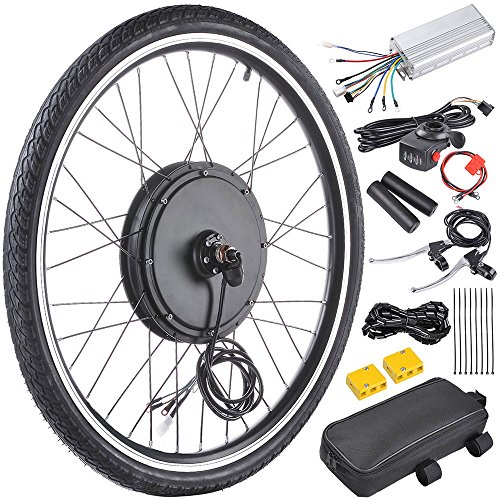
The AW 48V 1000W front-wheel kit provides a reliable, no-frills electric upgrade for 26″ bikes. The brushless gearless hub motor emphasizes quiet operation and smooth power delivery, with a top speed around 45 km/h (28 mph) under ideal conditions. The aluminum frame contributes to durability while supporting a substantial rider weight. The system includes a thumb throttle and a multi-indicator battery readout, helping riders monitor energy use and plan charging needs.
Installation is designed to be broadly compatible with 26″ frames and both disc and V-brake setups, giving riders flexibility in brake choice. The kit’s focus on simplicity makes it an accessible option for daily commutes or light recreational rides. To maximize efficiency, riders should pair the motor with a suitable 36V battery and ensure mounting hardware is torqued to spec. Proper routing of wiring reduces risk of snags and improves overall reliability.
As with all front-hub upgrades, handling and steering feel can change after installation. Riders may notice more immediate torque at standstill and a different brake feel with the added front-wheel mass. Regular checks of fork alignment and wheel truing help preserve performance and safety over time.
PEXMOR Front Wheel 750W Conversion Kit

The PEXMOR 750W front-wheel conversion kit is designed for 20″ and 24″ bikes, offering versatility for riders with smaller frame sizes. The kit features a 750W brushless hub motor, a three-mode controller, PAS, LCD display, and a twist throttle. This combination provides flexible power management for city routes and light hills, with a controlled level of performance that suits a wide range of riders. The 36V system ensures compatibility with common battery configurations and efficient operation.
Key design elements include an LCD display integrated into the throttle for quick ride data, a sine-wave controller that supports Hall and non-Hall mode operation, and pedal-assist systems that let riders choose from PAS presets to manual throttle. Installation is relatively straightforward on compatible frames, and the kit aims to balance performance with ease of use. Riders should verify frame dropout spacing, front fork compatibility, and battery readiness before installing this kit to ensure safe and reliable operation.
Buying Guide
Power, performance, and intended use
Choose power based on riding goals. If you primarily ride in flat urban areas, a 500W mid-drive or 1000W hub kit can provide ample assist without excessive weight. For hills, long commutes, or higher-speed cruising, a 2000W rear-hub option or a robust mid-drive can offer stronger torque and better grade performance. Consider local regulations on power limits and top speeds, as these can vary by region and affect legal use on streets and bike lanes.
Wheel type: mid-drive vs hub
- Mid-drive kits (like BAFANG) work with the bike’s gears, offering strong climbing power and efficient use of the drivetrain, but often require careful installation and potential frame compatibility checks.
- Hub kits (front or rear) add power at the wheel and are typically easier to install, but may alter steering feel (front hub) and weight distribution (rear hub).
- Consider your typical riding terrain, braking setup, and any frame clearance concerns when choosing between mid-drive and hub configurations.
Battery, range, and charging
Power and range depend on battery voltage, capacity, and efficiency. Higher voltage (e.g., 72V vs 48V) can provide more speed and torque but requires compatible controllers, wiring, and frame clearance. A battery’s weight also affects handling and stopping distance. Select a battery with a credible capacity rating, a compatible charger, and a safe mounting solution that fits your bike’s geometry.
Compatibility and installation considerations
- Frame compatibility: Check dropout spacing, fork width, and crankset clearance for mid-drive installations.
- Brake compatibility: Ensure the kit aligns with your existing disc or rim brakes and that the brake levers are compatible with the motor’s power management.
- Wiring and integration: Plan cable routing to avoid moving parts, weather exposure, or snag hazards. Some kits include cables and mounting hardware to reduce sourcing steps.
- Weight distribution: Front-hub kits shift weight forward; rear-hub kits alter balance. Consider rider comfort and handling after installation.
Safety, maintenance, and regulations
Safety depends on proper torque, secure mounting, and correct braking performance. Regularly inspect motor mountings, wheel trueness, and electrical connections. Follow local regulations regarding electric bicycle classifications, helmet use, and permissible top speeds. Keep spare fuses, proper battery charging practices, and a maintenance plan to extend the life of the kit and its components.