For RV owners, transporting bikes without sacrificing cargo area requires a vertical rack approach that fits the vehicle’s design—from tongue-mounted bunk systems to ladder and bumper racks. The following five options emphasize vertical or near-vertical mounting concepts built for RV life, spanning tongue-mounted solutions, ladder-adapters, bumper-mounted designs, and hitch-mounted carriers. Each profile notes mounting method, capacity, compatibility, and key features to help travelers pick a fit for their rig and biking needs.
The selections prioritize safety, stability, and ease of use so bikes stay secure on the road. Use the quick-reference table below for a snapshot, then explore in-depth profiles to determine the best match for your RV setup and riding style.
| Product | Brand | Mount Type | Bike Capacity | Notable Feature |
|---|---|---|---|---|
| Stromberg Carlson CC-275 Bike Bunk | Stromberg Carlson | Trailer Tongue 2″ Receiver | Up to 100 lbs | Adjustable frame width 14–55 inches; all-steel durability |
| Camco RV Ladder Mount Bike Rack | Camco | Ladder Mount | Two bikes (max 60 lbs total) | Compatible with most RV ladders |
| Swagman RV Approved 4-Bike Bumper Rack | Swagman | RV Bumper Rack | 1–4 bikes (30 lb per bike) | Fits 4″–4.5″ square bumpers; heavy-duty steel |
| ECOTRIC RV Bicycle Carrier Rack | ECOTRIC | Rear Mount Carrier | 1–4 bikes | Automotive-grade steel; weather-resistant powder coat |
| TrailV2 Plus Hitch 2 Ebike Rack | STUDTREX | 2″ Hitch Receiver | 2 bikes; up to 170 lbs total | 46″ ramp; anti-theft and wide-tire support |
Stromberg Carlson CC-275 Bike Bunk
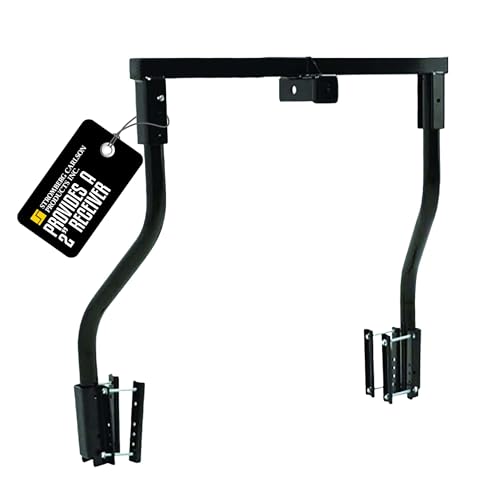
The Stromberg Carlson CC-275 Bike Bunk provides a trailer tongue mounting solution that creates a raised 2″ receiver on the A-frame, enabling RV-approved bike racks to be mounted securely. Its adjustable vertical posts enable mounting at frame widths from 14 to 55 inches, making it compatible with a wide range of trailer sizes. Constructed in all-steel, this bunk delivers durability for long trips and keeps bikes in the softest riding area on the trailer by elevating mounting height. The design supports up to 100 lbs, allowing most standard racks to be attached without overloading the tongue. The system is designed to work with RV-approved 2″ racks, simplifying compatibility checks for many popular models. Consider the available clearance around turning points and ensure your chosen rack matches the bunk’s height range to prevent contact with the trailer or hitch components. Proper installation and periodic inspection will help maintain stability over rough roads and uneven surfaces.
Camco RV Ladder Mount Bike Rack

The Camco RV Ladder Mount Bike Rack offers an easy way to transport bikes on an RV using the ladder. It’s compatible with most standard RV ladders, making it a practical option for many campers. The rack holds two bikes with a maximum weight capacity of 60 lbs, making it suitable for standard bicycles rather than heavy e-bikes. The heavy-duty steel construction supports repeated road use and exposure to weather. Potential users should verify ladder width and rack spacing to ensure safe clearance between bikes and each other, the ladder rails, and any mounted accessories. Smaller framed bikes may require careful positioning to avoid frame conflicts.
Swagman RV Approved 4-Bike Bumper Rack
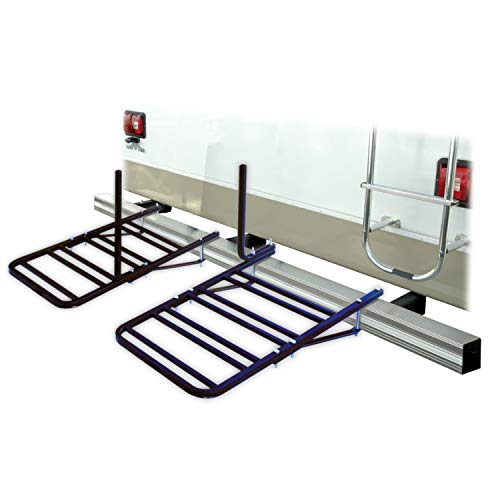
The Swagman RV Approved 4-Bike Bumper Rack is designed to transport bikes on an RV bumper. It can accommodate 1 to 4 bicycles, with a per-bike weight limit of 30 lbs. The rack is built for 4″ to 4.5″ square bumpers and installs using bolts around the bumper for a secure mount. The construction relies on heavy-duty steel with a protective finish to resist weathering. Pros include straightforward installation and the ability to carry multiple bikes; however, users should assess bumper strength and stability, particularly on longer trips or in challenging road conditions, and ensure bicycles sit squarely to minimize sway and contact with the vehicle body.
ECOTRIC RV Bicycle Carrier Rack

ECOTRIC’s RV Bicycle Carrier Rack is a rear-mount carrier designed to fit a wide range of RVs, campers, and trailers. It can carry 1 to 4 bicycles, offering flexibility for solo riders or group trips. Built from automotive-grade steel with a black powder coating, the rack is designed to endure outdoor conditions and resist corrosion. Its straightforward hitch-based installation simplifies mounting to compatible RVs, while the 1–4 bike capacity allows gradual expansion as biking needs grow. Potential users should review the weight distribution and ensure the rack’s mounting points align with the RV’s bumper or rear hitch area to avoid obstruction when accessing storage or cargo compartments.
TrailV2 Plus Hitch 2 Ebike Rack

The TrailV2 Plus Hitch 2 Ebike Rack from STUDTREX focuses on upgraded loading and security features for heavy bikes. It supports up to 2 bicycles with a combined capacity of 170 lbs and is designed for 2″ hitch receivers, ensuring broad vehicle compatibility. A notable enhancement is the extended ramp, now 46 inches long, which assists loading higher or heavier bikes, including some electric models, with less strain. A new guide kit with repositionable blocks and fixed slopes helps accommodate wider tires and heavier loads, improving safety during loading and unloading. The rack also incorporates anti-theft protection via a keyed hitch lock and two wheel locks, plus rubber-coated straps to prevent tire damage and a wrap-around front cradle for added stability.
Buying Guide
Mounting Type And Vehicle Fit
RV bike racks come in tongue-mounted, ladder-mounted, bumper-mounted, and hitch-mounted designs. Tongue-mounted bunks lift bikes away from the trailer and are ideal for longer trailers with adequate frame width, but may require extra clearance for steering and hitch accessories. Ladder mounts leverage existing ladder rails to secure bikes, offering a space-saving solution for many RVs but may limit some bike sizes. Bumper racks attach to the RV bumper and can maximize interior storage, yet bumper strength and bumper accessibility should be considered. Hitch-mounted racks provide broad vehicle compatibility and often offer tilt and access features, but they shift weight to the hitch area and can affect vehicle balance. Choose a mount type that aligns with your RV’s design, clearance, and typical travel routes.
Weight Capacity and Bike Types
Consider whether you ride standard bikes, e-bikes, or fat-tire bikes, as capacity and tire width affect rack choice. Tongue bunk and bumper racks often emphasize higher per-bike weights and overall capacity, while ladder mounts emphasize ladder integrity and spacing. If you plan to carry heavy bikes or multiple riders’ bikes, verify the rack’s total weight rating and per-bike limits. For e-bikes or fat bikes, look for higher weight capacities, wider tire compatibility, and secure strap systems to prevent wheel and frame damage over rough roads.
Durability, Weather Resistance, And Maintenance
RVs face varied weather conditions. Steel construction with powder-coated finishes resists corrosion, while rubberized straps minimize tire wear. If you frequently travel in snow, rain, and coastal environments, prioritize rugged materials and corrosion resistance. Maintenance considerations include checking bolts, hinges, and locks for rust, lubricating moving parts, and ensuring secure mounting points remain tight after long trips.
Security and Access
Security features such as hitch locks, wheel locks, and anti-theft hardware help deter theft and tampering. Some racks offer integrated tilt or ramp features to improve trunk or cargo-area access after bikes are mounted. Consider the level of access you need to reach gear inside your RV and how the rack affects clearance when opening doors or rear compartments. If you travel with valuables or frequently detach and reattach bikes, look for locking mechanisms and simple, repeatable mounting procedures.
Installation And Compatibility Considerations
Installation difficulty varies by mounting type. Tongue bunk systems may require alignment with the trailer tongue and frame width adjustments. Ladder mounts demand secure ladder contact and proper spacing to avoid bike-to-bike interference. Bumper racks depend on bumper dimensions and strength, while hitch racks require compatible hitch receivers and potential aftermarket accessories. Always check your RV’s manufacturer guidelines and the rack’s installation instructions for mounting hardware compatibility, weight limits, and any required supplementary components.
Quick Comparison
| Feature | Stromberg Carlson CC-275 | Camco Ladder Mount | Swagman Bumper Rack | ECOTRIC Carrier Rack | TrailV2 Plus |
|---|---|---|---|---|---|
| Mount Type | Trailer Tongue | Ladder | Bumper | Rear Carrier | 2″ Hitch |
| Bike Capacity | Up to 100 lbs | 2 bikes | 1–4 bikes | 1–4 bikes | 2 bikes |
| Wheel/Tire Notes | Frame-width adjustable 14–55″ | Standard bikes; frame fit varies | Standard bumpers; per-bike weight 30 lbs | 1–4 bikes; general compatibility | Up to 5″ fat tires |
| Notable Benefit | Raised, secure tongue mount | Simple ladder integration | Multi-bike capacity on bumper | Weather-resistant steel | Extended ramp; anti-theft |
When choosing among these options, consider your RV’s architecture, typical travel routes, and how you value access versus cargo space. If you frequently haul multiple bikes or heavier rides, prioritize higher weight capacity and robust mounting hardware. For limited exterior space, ladder or bumper-mounted solutions may offer the best balance of accessibility and load distribution. Always ensure compatibility with your specific RV model, optimize weight distribution to maintain safe handling, and follow manufacturer installation guidelines for best performance on the road.